| OCR Text |
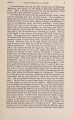
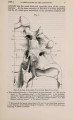
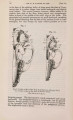
Show 1869.] DR. J. S. BOWERBANK ON SILICEO-FIBROUS SPONGES. 71 the membrane, while their shafts are freely suspended in the interval existing between the dermal membrane and the surface of the rigid skeleton; so that when the animal is actively inhaling or exhaling, the expansile dermal system expands or contracts in accordance with necessities of its vital actions; but when in a state of inaction or repose, it subsides on to the rigid surface of the skeleton, and the long shafts of its connecting spicula are immersed in its interstices. This singular and beautiful provision of nature prevails in all the known siliceo-fibrous sponges which are in the condition they were when alive in their native element; it also readily accounts for the naked skeleton-like structure of many of the specimens of Dactylocalyx and Iphiteon which are preserved in the museums of London and Paris. The whole of this beautiful dermal structure is held together in life by the tough and elastic dermal membrane; but as soon as this is removed, either by decomposition or maceration in water, the remainder is the skeleton only of the animal, with probably a few of the retentive and interstitial spicula entangled in the interstices of the skeleton. I have not seen one of these sponges taken from the sea; but in two specimens in m y possession, which were dried in the living condition, Dactylocalyx Prattii and Masoni, their external appearance is that of being enveloped in a thin brown leathery or parchment-like skin, and not the slightest indication of the beautiful rigid siliceo-fibrous skeleton is visible. In D. Prattii the expansile dermal membrane in its present condition is contracted into folds and ridges at the margin of the sponge, strongly indicating its lax and expansile nature when in the living state. I immersed one end of m y specimen of D. Masoni in water for about half an hour; on removing it from the water, the dermal surface presented a smooth and slightly glazed appearance, and the membrane was readily removeable by the point of a penknife from the mass of the skeleton. When thus removed, I submitted it, immersed in water, to a power of 108 linear; I found that the sarcode lining it was so abundant and so much expanded by the water it had imbibed, that I could not see the apices of the numerous connecting spicula imbedded in it, their long shafts only being visible on its inner surface projecting through the stratum of sarcode. A thin slice of the rigid skeleton prepared under the same circumstances presented similar difficulties ; the siliceous fibres were completely obscured by the abundance of the sarcode present, which filled all the interstitial cavities, appearing like a firm gelatinous matter of a deep-brown colour ; and it was not until the specimens under consideration were dried, the sarcode again contracted into comparatively a thin film, and the specimens mounted in Canada balsam, that any of the siliceous structures of the sponge could be rendered distinctly visible This abundance of the sarcode and its capability when in the dried state of imbibing water with great avidity are not peculiar to the siliceo-fibrous sponges; a great number of the Hahchondroid sponges, under similar circumstances, present precisely the same P If wTmake sections in the dried state of either of the sponges |