| OCR Text |
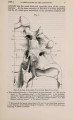
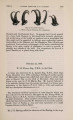
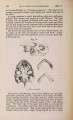
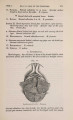
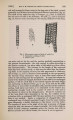
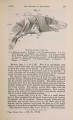
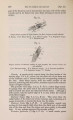
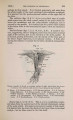
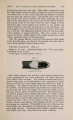
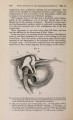
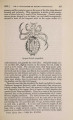
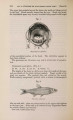
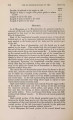
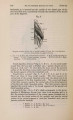
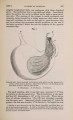
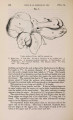
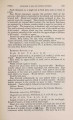
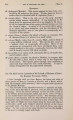
Show 490 PROF. W. H. FLOWER ON THE [Nov. 11, Fig. 8. Under surface of liver; half the natural size. 2?, Right lobe. L. Left lobe. M. and Q. Divisions of the middle lobe. 8. Spigelian lobe. A. Accessory (caudate) right lobe. B. Gall-bladder. CB. Cystic duct. BB. Common bile-duct. HA. Hepatic artery. VC. Vena cava. VP. Vena porta. doubling on itself at the neck as figured by Daubenton in the Hyaena. Its length is 1"'7, its greatest diameter *8". It passes gradually into the nearly straight cystic duct, which is *7" long. The hepatic duct is formed of two branches, one from the left and middle lobe, and one from the right lobe; just before they unite, the cystic duct joins the former. The common bile-duct is 2" long, and enters the duodenum about 2" below the pylorus, after running very obliquely through the intestinal walls, and being joined by the pancreatic duct. The pancreas is very long and slender, 9" in length. The spleen is long, narrow, and flat. It has an oblique fissure on its outer surface near the upper end, and a slight longitudinal fissure near the middle of the same surface. The lower extremity is rather narrower than the upper. Its length is 7f "> its greatest diameter 1". The right kidney was placed nearly an inch higher than the left. These organs are simple and of the usual form; 2"*4 long, and 1"*4 broad. The superficial veins have the same arborescent arrangement as in the Hyaenas and Felidce. The suprarenal bodies were placed close to the inner side of the upper end of the kidney. They have a flattened rhomboid form, and are larger at the upper end. The length of each is '9"; its width at the upper end *5", at the lower end *35". |