| OCR Text |
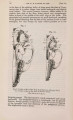
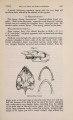
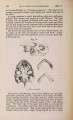
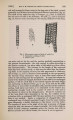
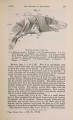
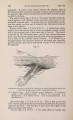
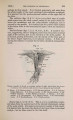
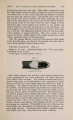
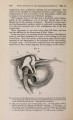
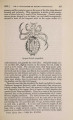
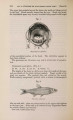
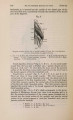
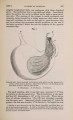
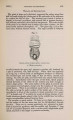
Show 488 PROF. W. H. FLOWER ON THE [Nov. 1 1 r (2" long), and situated close to the ilio-ciecal valve. There were altogether eight such patches. The ileum entered the large intestine almost transversely from the left, inclining slightly backwards. The short globular caecum (tig. 6) Fig. 6. Caecum, distended with plaster of Paris; half the natural size. lay on the right psoas muscle and the iliac vessels, its rounded extremity being turned backwards and to the left. The colon, nearly three times the diameter of the ileum, ascended for 2\ inches, till it came into contact with the under surface of the stomach, then took a rather suddeu bend, curving downwards and to the left (there being no transverse colon, properly speaking) down to the left iliac fossa, a distance of 5", then curved inwards, and finally backwards as it entered the pelvis. The length of the whole of the large intestine when straightened was 15". Its width was tolerably uniform, though contracted somewhat just above the sigmoid flexure, and dilated again in the rectal portion. It had smooth but thick muscular walls, the longitudinal bands being remarkably distinct. The mucous membrane was smooth, with numerous scattered solitary glands, especially abundant in the caecum, at the apex of which they form a distinct cluster. In the extreme shortness of the caecum, Proteles differs both from the Hycena (at least II. striata) and also from Herpestes*. The intestinal canal, from pylorus to anus, is not five times the length of the body * Daubenton figures the caecum of the Hyana which he dissected ; it is given in the table of measurements as 9" long. Reimann found the caecum 6" long in the same species (Spicileg. Observ. Anat. de Hyaena: Berol. 1811). |