| OCR Text |
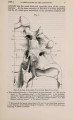
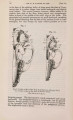
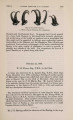
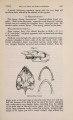
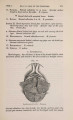
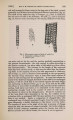
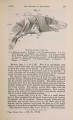
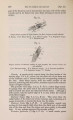
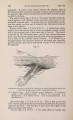
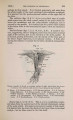
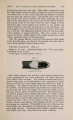
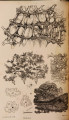
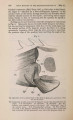
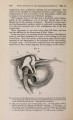
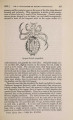
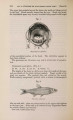
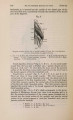
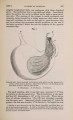
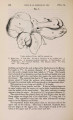
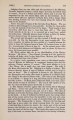
Show 486 PROF. W. H. FLOWER ON THE [Nov. 1 1, allied forms, gives off two main branches close together; the first, after a course of *6", divides into the two carotids and the right subclavian ; the second is the left subclavian. ABDOMINAL VISCERA. On opeuing the abdominal cavity, the liver was seen extending across the anterior part, occupying apparently as much of the left as the right side; next to it was seen a portion of the transversely lying stomach, then the great omentum (quite destitute of fat) completely concealing all the other viscera. In the peritoneal cavity were numerous, very slender, white, hairlike, very stiff and elastic Nematode worms, 2|" long; some few, otherwise similar in appearance, were of a blackish colour*. There were no Entozoa within the intestinal canal. The stomach and the upper half of the small intestine were distended with straw, a closely impacted mass of which produced an absolute obstruction to the passage, evidently the cause of the animal's death. The way the intestines were twisted and knotted, together with numerous partial invaginations, showed that violent peristaltic movements had taken place without successfully overcoming the obstruction. The mucous membrane was also severely congested at several spots. The lower half of the small intestines and the colon were contracted and almost empty. The stomach (fig. 5) was short and rounded, consisting of a large and globular left end or fundus, into the upper part of which the rather narrow oesophagus enters, and a comparatively small pyloric prolongation, divided in the middle by a slight constriction. The walls are very thick and muscular, especially towards the pyloric end*t\ Before its removal from the body it measured 5" in length; its diameter, from the entrance of the oesophagus to the opposite point of the great curvature, was 3|". The interior of the stomach may be divided into three distinct portions : - 1 . The left end or cardiac portion, with a perfectly smooth pale-coloured lining membrane. 2. The middle portion, with a softer, granular-looking redder lining, and bearing a series of strongly marked longitudinal ridges or folds of the mucous membrane, most prominent and largest at the greater curvature, and extending over the lower two-thirds of the circumference, but wanting on the upper third, or that next the lesser curvature: they are nearly parallel, though more approximated to each other near the pylorus, and diverging towards the fundus, corresponding in this with the gradual enlargement of the walls of the cavity in this direction. 3. In the narrow right extremity of the stomach extending 2" from the pylorus, the mucous membrane is again smooth, or only slightly raised into some * Some of these have been forwarded to Dr. Cobbold for examination. He reports that they belong to a species hitherto undescribed, and proposes to give an account of their structure at an early meeting of the Society. t Daubenton describes the walls of the stomach in the Hyrena as thin and semitransparent. |