| OCR Text |
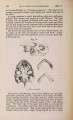
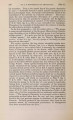
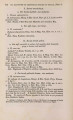
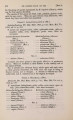
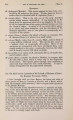
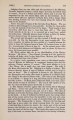
Show 608 PROF. W. H. FLOWER ON FOUR SPECIMENS [Dec. 9, process; the second and third have also moderately long capitular processes; the fourth has none; the fifteenth rib is slender and twisted, but nearly as long as the penultimate. The sternum consists of a broader anterior portion, 21" from side to side, and a narrow posterior prolongation, turned somewhat to the right side, 8|" long; the whole length from before backwards is 17". The anterior border is very thin, notched, and evidently incompletely ossified ; about 1" behind it is an oval foramen, 1" in length, situated in the mesial line. The hyoid (basihyal and thyro-hyal ankylosed) is 33" across. The scapula is 25±" in height, and 46" in breadth. The humerus 17\" long; the radius 28£"; the ulna 32|", or without the olecranon 27|". The length of the cranium is 14' 6", the greatest breadth 6' 4". The length of the rostrum 10'. The breadth of the middle of the rostrum 30"; the breadth of the maxillary at this point 8£", of the premaxillary 5|"; the premaxillary projects 9" beyond the maxillary. The length of the lower jaw is 13' 6". 2. The next animal (a male) was stranded near Falmouth in August 1863. The skeleton was prepared by M r . Gerrard, jun., at whose establishment I examined it in April 1864. It is now in the Alexandra Park. It is (or was when I last saw it) quite perfect, with the exception of one or two of the terminal phalanges. All the epiphyses of the vertebrae are completely united, so that the animal must have been fully adult. The skeleton as articulated measures in a straight line 66', of which the skull occupies 15' 6". The various dimensions of the cranium and mandible are given in P. Z. S. 1864, p. 411*. There are sixty-one vertebrae ; but the last is elongated and constricted in the middle, as if it really consisted of two united. Of these, seven are cervical, fifteen thoracic, fourteen lumbar, and twenty-five or twenty-six (according as the last is reckoned as one or two) caudal. The second cervical has immense, expanded, backward-directed transverse processes, with a large perforation at the proximal end. The second, third, fourth, and fifth have the upper and lower processes united so as to form rings. The sixth has a long upper process ; but the lower one is a mere tubercle, larger on one side than the other. In the seventh the lower process is entirely absent. The extreme width between the ends of the transverse processes of the different cervical vertebrae is as follows:-First 26", second 43", third 34", fourth 35£", fifth 35f", sixth 34", seventh 33^". The foramen in the transverse process of the second cervical vertebra is 6|" broad, and 4" high; the corresponding foramen in the third vertebra is 8" broad, and 64/ high; in the fourth 8|" broad, and 6" high. The chevron bones appear to be all present. There are eighteen; the first and the last three have not united in the middle line. The first is placed at the hinder end of the body of the thirty-seventh vertebra. The vertical perforations through the base of the transverse processes commence in the eighth caudal vertebra. * The atlas, axis, and fifth cervical vertebra of this specimen are figured by Dr. Gray in ' Cat. of Seals and Whales in Brit. Mus.' 1866, p. 145. |