| OCR Text |
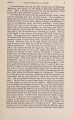
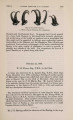
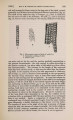
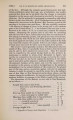
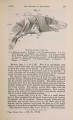
Show 232 MR. F. H.WELCH ON LEPUS AMERICANUS. [Apr. 8, reddish-brown ones with white tips: these latter are evidently unaltered or partially changed summer varieties; but the mass of the pile, trebly increased in number and at least half an inch in length, is the produce of the hybernal growth superadded to the elongated and blanched autumnal coat. The under fur has increased T*L inch in length, but is unaltered in thickness or colour. A crop of white hair has sprung up on the inside of the ear, on the outside and on the face the hairs have increased in length, and the shaft is partially or wholly whitened from the tip downwards. In most specimens no new hybernal growth is perceptible in these localities, in some there is a slight addition, in a very few it is as complete as on the back. However, where no increase in number ensues, compensation is effected by an extra augmented growth in the existent fur. On the legs the change is limited to a lengthening and bleaching of the outer hair; often this is limited to the tips of the shaft; and an occasional absence of change in spots leaves an irregular fawn-coloured mottling and streaking, especially on the front paws ; the hair on the treading surface is lengthened and dirty white. On the underparts there is no addition beyond an increase of length of the fur ; occasionally the whiskers and eyebrows remain black. Thus the winter hue would appear to be brought about by a change of colour in the pile of the autumnal coat combined with a new hybernal white crop, the latter undoubtedly playing no small part in the colouring process and in the thickening of the fur. There is no indication of shedding. An increase in length ensues over the whole body. On the underparts the change is limited to this, but elsewhere it is associated with a bleaching of the pile, generally commencing at the tip of the hair and involving part or the whole of the shaft. On the feet, and generally on the outside of the ears and face, no additional growth is perceptible; but on the inside of the ears, and over the whole back and sides, a thick crop of white hair springs up as the winter ad vances, and, blending with the changed surface, materially increases the thickness of the fur, protects the animal against the inclemency of winter, and assimilates it in colour to external nature. The process may be summed up as a combination of colour-change (except in the underparts) of the lengthened outer hairs of the autumnal coat, with an additional hybernal growth ; the former universal over the body, the latter limited to certain portions. The shaft of the hair of the new growth is invariably white, a circumstance which renders it easily distinguished from the autumnal hair in process of change. Careful examination of a great number of these latter hairs will render it evident that, although the blanching process commences, perhaps, most frequently at the tip and proceeds downwards, involving the whole or a part only of the shaft, yet it is easy to obtain specimens (especially among the shorter variety of the pile) demonstrating its commencement at the centre, and occasionally at the attached extremity. The whiskers, which apparently do not lengthen but merely alter in colour, will demonstrate each variety. Microscopically examined, the hair of this Rodent, circular in outline, is composed of oval or irregular shaped cells placed end to |