| OCR Text |
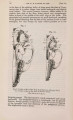
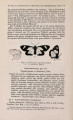
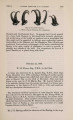
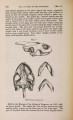
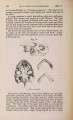
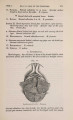
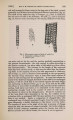
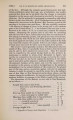
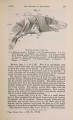
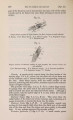
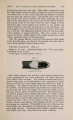
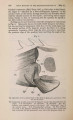
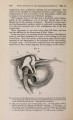
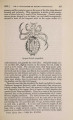
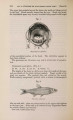
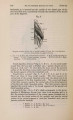
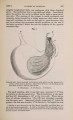
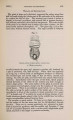
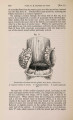
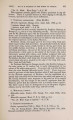
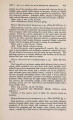
Show 404 PROF. HUXLEY ON THE REPRESENTATIVES OF [May 27, in one matter of special homology it must be altered, and for qua-ratum = incus we must read quadratum = malleus. The modification of Reichert's view which I now propose completely removes a difficulty which has often presented itself to m y own mind, and which is urged with much force by Prof. Peters, in his first two papers. If the incus be the homologue of the quadratum, why does it become so small and insignificant in the Marsupials and Monotremes, which, in so many respects, approach the Sauropsida ? This question I have always felt could only be met by another. Why, if the ossicula auditus of the mammal do not represent bones of much more importance in the Sauropsida, does the malleus attain such a vast size in the Monotremata 1 If the malleus is, as I have endeavoured to prove it to be, the homologue ot the quadratum, the last question receives an obvious answer ; and no less readily is it intelligible why the incus should be reduced, seeing that the suprastapedial is always insignificant in size, and may even become a mere fibrous band, in the Sauropsida. Fig. 7. The left tympanic cavity and the adjacent parts in Echidna setosa. Some portions of the squamosal and of the periotic bones, with the tympanic membrane, have been removed. Mn. Mandible. Sq. Squamosal. Pt.g. The pterygoid. St.h. The stylo-hyal. VII. The portio dura. St. The stapes. /. The incus, the greater part of the contour of which is supposed to be seen through the malleus (M). P.g. Folian process of the malleus. Tr.t. The tensor tympani. I may mention, incidentally, that Echidna presents other anomalies than those which have been described by Prof. Peters and others. The muscle which plays the part of the tensor tympani is very large and arises from the base of the skull, where it forms the roof of that posterior and inner region of the tympanic cavity which is bounded below by the pterygoid. The strong tendon of this muscle |