| OCR Text |
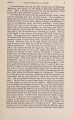
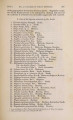
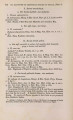
Show 510 MR. R. U. SHARPE ON THE GENUS CEYX. [Nov. 11, paper on the latter genus; I think that it is correct to class these two species together, but I should prefer that they were considered aberrant Ceyces instead of aberrant Alcyones. On the receipt of Count Salvadori's paper, an early copy of which he had the goodness to send me, I wrote to him expressing my admiration of the elaborate way in which he had worked out the genus, only adding that, although I believed he had taken the right view of the case, I trusted an examination of Strickland's type would confirm his conclusions. As, however, I did not consider the matter settled until I had examined for myself the type of Strickland's C. rufidorsa, I went to Cambridge as soon as the collection was arranged, on purpose to satisfy myself on this point. Every facility was kindly afforded me by Mr. J. W . Clark, the Superintendent of the Museum, and I had no difficulty in discovering the bird I wanted to see. I was at once astonished to find that Strickland's C. rufidorsa was the C. rufidorsa of authors, and that, after all, C. innominata must give way, and be added as a synonym. But, then, what could the bird which we had taken to be the true C. rufidorsa really be? This 1 could not determine for a long time; but on further comparison I found that it must be the young bird of C. tridactyla (Pall.). This never struck me before; and because I was bent on noticing the points of difference between the bird and C. dillwynni and C. rufidorsa, auct., I had never compared it with C. tridactyla. It now remains only to clear up the confusion which exists with regard to the rufous-headed Ceyces resulting from the above error, for which, however, I blame myself especially, as it was originally my suggestion to Count Salvadori. M y previous paper may be taken as a correct exposition of the synonymy of the various Ceyces ; for the mersion of C. uropygialis in C. lepida, and the separation of C. philippinensis as an Alcyone, are questions which a further knowledge of the birds and a further acquisition of specimens alone can satisfactorily determine. A new synoptical arrangement of the rufous-headed Ceyces is necessary ; and it seems to me that Count Salvadori has grasped the salient points of difference in his "clavis" of the different species. A. Capite et uropygio lilacinio : rostro corallino. a. Macula ad latera colli carulea nulla. a'. Scapularibus lilacinis. a". Tectricibus alarum runs, haud creruleo lavatis G. rufidorsa. b". Tectricibus alarum nigris ac rufis, creruleo lavatis C. sharpii. b'. Scapularibus nigris ca3ruleo lavatis C. dillwynni. b. Macula ad latera colli crerulea. a'. Major: interscapulio et scapularibus rulis C. melanura. If. Minor: interscapulio et scapularibus nigris creruleo lavatis G. tridactyla. For the arrangement of the blue-backed section, see my paper (P. Z. S. 1868, p. 587) and that of Count Salvadori (Atti R. Accad. Torino, iv. p. 440). |