| OCR Text |
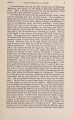
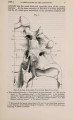
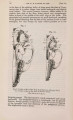
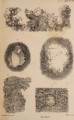
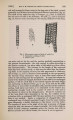
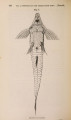
Show 346 DR. J. S. BOWERBANK ON SILICEO-FIBROUS SPONGES. [May 13, skeleton in nitric acid, when it will be immediately apparent that disintegration of the reticulated structure results from this operation, which would inevitably be the case if it were formed of fasciculi of spicula held together by sarcode only. On the contrary, the whole of the skeleton is formed of an irregular network of solid siliceous fibres approaching each other and anastomosing with more than the usual frequency in such sponges. Very few, if any, of the secondary fibres in either the transverse or diagonal portions of the skeleton are simple in their structure. They seem always to be composed of two or more simple fibres running parallel to each other and anastomosing at short distances. Sometimes the anastomosing points of two parallel fibres are so close to each other that the two thus combined have the appearance of a narrow tape or ribbon with thickened margius and a line of nearly uniform pinhole perforations running down the middle of it. Amidst these complicated anastomosing lines of the skeleton numerous stout rectangulated hexradiate and triradiate spicula are irregularly mixed; they appear as if they were simply entangled amidst the tissues supporting and supported by the interstitial membranes of the sponge. None of them under these circumstances have any permanent connexion with the skeleton; neither do the spicula of the numerous bundles of long prehensile organs so abundant towards the base of the sponge ever anastomose with the skeleton-fibres or with each other. No marks of such an attachment can be detected upon any part of them ; and, in truth, their recurved spinous appendages and their long and flexible shafts imbedded in the tough membranous integuments of the dermal tissues renders such anastomsis of the organs with the rigid skeleton quite unnecessary ; and if we measure the probability of the possession of such dermal integuments by Alcyoncellum in a living state with what we know of the dermal structures oi Dactylocalyx Masoni, Prattii, &c, little doubt can remain in our minds that its dermal integuments are much of the same nature as those of the rest of the rigid siliceo-fibrous O sponges. The structure of the stout network of the oscular area is very similar to that of the corresponding organ in Iphiteon beatrix. Each fibre of the net is compounded of a condensed mass of simple skeleton-fibres anastomosing in every direction as in that of /. beatrix. In truth, the more searchingly we examine the skeleton-structures of the beautiful subject under description the more closely we find its alliances to be to the great family of the siliceo-fibrous sponges. It is much to be regretted that, amidst the large number of specimens that have recently been imported, there does not appear to have been any one of them preserved in the living state as when taken from the sea; nor have we any well authenticated report by a competent naturalist of their condition when thus obtained. But if we may reason from the analogies presented by other siliceo-fibrous sponges preserved in the state in which they were taken from the sea, we should expect to find Alcyoncellum with a stout and somewhat coriaceous enveloping dermal membrane; and I have in my possession a fragment of such a membrane about 2 lines in length, |