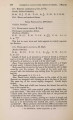
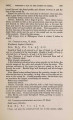
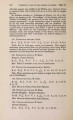
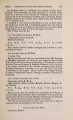
| OCR Text |
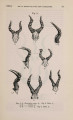
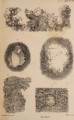
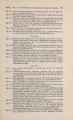
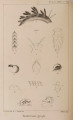
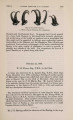
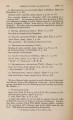
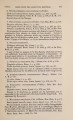
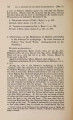
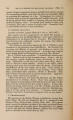
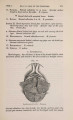
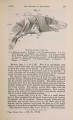
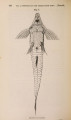
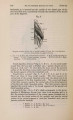
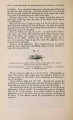
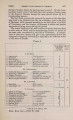
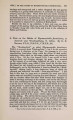
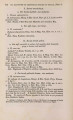
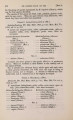
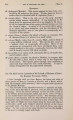
Show 1869.] MR. SCLATER ON TWO SPECIES OF MAMMALS. 595 British Museum, which had been brought to this country living by Mr. Whitfield, and had died in the Surrey Zoological Gardens. In one of the plates of the 'Knowsley Menagerie' (plate vii. fig. 1) an Antelope is figured under the same name, and is described in the letterpress by Dr. Gray in very nearly the same terms as in the original description in the 'Annals.'" This description is repeated, word for word, in Dr. Gray's "Synopsis of Antelopes" published in the Society's 'Proceedings' for 1850 (p. 123). In 1852, Dr. Gray seems to have come to the conclusion that the animal figured in the ' Knowsley Menagerie' was not the same as the true Cephalophus dorsalis originally described from Mr. Whitfield's specimen, and, accordingly, in his list of Ungulata Furcipeda in the British Museum, named the former Cephalophus badius, retaining the name Cephalophus dorsalis for the latter. Dr. Gray, however, does not state exactly how the two species are to be distinguished, and, after examining the two typical specimens in the British Museum, I am unable to regard them as more than slight varieties of the same animal. The typical specimen of C. breviceps is likewise now in the National Collection, and appears to me quite undistinguishable from either of the two above mentioned, though most nearly resembling that called by Dr. Gray C. badius. The only other original author who appears to have mentioned this Antelope is Temminck, who, in his ' Esquisses Zoologiques sur la Cote de Guine' (Leiden, 1853), tells us that Cephalophus dorsalis inhabits the forests of Ashantee and Sierra Leone, but is rare in the forests of the sea-coast. W e have had three examples of this Antelope living in the Society's Menagerie. The first of these (a) was purchased of a dealer in Liverpool on the 27th of August, 1861, and lived more than two years in the Gardens, having died on the 6th of November, 1863. The second specimen (b) is that already mentioned, which was received, when quite immature, on the 13th of February, 1866, and described by Dr. Gray as Cephalophus breviceps. This animal was a female, and was kept in the same division of the Gazelle-sheds with a male of the allied species, Cephalophus rufilatus, with which it bred when adult. It produced a young one on the 25th of January last, and died on the following day. A third specimen (c) of the same Antelope was brought from the Gold Coast, and presented to the Society by Mr. C. B. Mosse, Staff- Surgeon, R.N., on the 16th of October last, but unfortunately died three days afterwards. Mr. Smit's drawing of the present species (Plate XLVI.) is taken from this last-named individual, which, however, as already stated, agrees closely with what Cephalophus breviceps became when adult. Dr. Murie has kindly communicated to me the following notes taken on a comparison of our specimen b of Cephalophus dorsalis and an example of a female of Cephalophus maxwellii which died about the same period. " As the table shows, there is little difference as to the dimen- PROC. ZOOL. Soc-1869, No. XXXIX. |