| OCR Text |
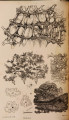
Show 1869.] ANATOMY OF PROTELES. 483 inch behind the incisors. Behind these are four more ridges, which do not pass across the middle line, being interrupted for a short space ; and each half ridge forms an arch by itself, having both ends directed backwards. The last two are much smaller than the others. Between the foremost ridge and the incisor teeth are three not very distinct prominences of the mucous membrane, the largest of the three being in the middle. On the depressed surfaces between the ridges, especially between the fifth and seventh, are numerous small, rounded, white tubercles. The palate behind the last ridge (which is 2"*2 from the incisor teeth) is quite smooth. There is no distinct uvula, only a median thickening of the arched posterior margin of the soft palate. The tonsils form prominent, oblique, narrow ridges on the sides of the fauces, half an inch in length. The tongue is large, flat, rather spatulate, and very soft or lax in its tissues. Its length is 6", and its greatest breadth (I" behind the apex) 1"*8. The fraenum is attached nearly three inches from the apex. The circumvallate papillse are rather small and only two in number, placed in the usual region of the tongue and half an inch apart. The dorsal surface of the tongue behind these papillae is soft and glandular, and bears scattered, long, soft and pointed papillae. All the middle portion of the dorsum is thickly covered with minute conical papillae, with their apices directed backwards and towards the middle line. Interspersed with these are numerous circular, rather flat-topped fungiform papillae. Rather in front of the middle of the dorsum, where the tongue begins to widen somewhat, the conical papillae increase in size, and are gradually transformed into papillae of very peculiar form, which cover the whole of the anterior third of the organ. These are very conspicuous (being quite white and very hard), short, rounded cones, or bosses, set in a smooth, soft, pink membrane. Their average diameter is upwards of ^ inch, and the distance between them nearly equal to the diameter. At the margin and apex of the tongue they gradually diminish in size. In the fore part of this curious patch the axes of the papillae are vertical to the plane of the dorsum of the tongue; but posteriorly their apices point backwards and they are flatter, and, as before said, pass insensibly into the minute conical papillae of the middle part of the tongue. I am not aware of any lingual papillae exactly like these. In Hycena, however, there is a central rounded patch of conspicuously enlarged conical papillae near the apex of the tongue. In the septum of the tongue, near the extremity, is a very small subcylindrical lytta, proportionally smaller than in Hycena. The submaxillary glands are of very large size, composed of very distinct large lobules, and of a bright yellow colour, having when fresh much the appearance of fat. The anterior end of each gland abuts against the angle of the jaw, or rather the masseter muscle covering it; the posterior against the transverse process of the atlas. Above it is in contact with the inferior surface of the cartilaginous meatus auditorius externus. Superficially it is covered by the platysma. In general form it is pear-shaped, having the large PROC. ZOOL. Soc-1869, No. XXXII. |