| OCR Text |
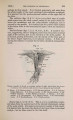
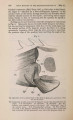
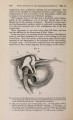
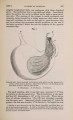
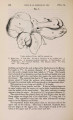
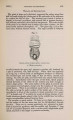
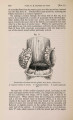
Show 1869.] ANATOMY OF PROTELES. 495 anal follicle. Each of these bodies is a very thin-walled sac, with large cavity within, and covered externally by a number of flattened glandular bodies of a brilliant orange-colour, and of various size and outline. These bodies are larger and more close together at the upper part of the sac; towards the sides they become smaller, and not so closely packed together; and on the under or rectal surface they are more sparse, especially near the pedicle, where the smooth sac-wall is bare for a considerable space. Each of these glands consists of a number of acini clustered round a central cavity, which communicates by a minute aperture with the cavity of the large sac. When a section was made through the large sac, its wall was seen to be very thin and quite smooth within ; the cavity has no partitions or septa, and but a single excretory orifice, which passes through the pedicle into the side of the transverse supraanal follicle, being the aperture before spoken of. The cavity was entirely filled with a bright reddish-orange substance of the consistence of cream-cheese, and with a very peculiar, powerful and penetrating, and decidedly disagreeable odour*. A supraanal follicle, similar to that of Proteles, is found in both species of Hycena^, also in the Suricate among the Viverridce. In Herpestes, the mucous membrane along the upper border of the anus is beset with minute apertures, the ducts of numerous small, rounded, seed-like glands situated just beneath the skin, of a pale yellowish colour, placed a little distance apart from each other. The skin, however, is not inverted to form a distinct sac. In Hycena these glands do not form such a dense compact mass as in Proteles, nor have they the same peculiar dark olive-colour. The lateral glandular sacs\ are common to Proteles and both forms of Hycena, and, indeed, although modified in form and structure, to almost all the Carnivora. Hycena striata has, in addition, another lateral group of glands of similar structure situated posteriorly to the sac, around a depression or pouch of the great supraanal follicle, but not constricted off so as to form a distinct cavity with a narrow orifice as in the anterior glands. These I do not find represented in Proteles, and they appear to be absent also in Hycena crocuta; but of the anatomy of the last-named animal we have as yet very little reliable information. SKELETON. As the osteology of Proteles has been described both by Isidore * This odour was confined to the secretion of these glands, and did not pervade the whole animal. Smuts says, " hoc animal spargit odor em ingratissimum ac feetidum, qui in ipsis pellibus siccis remanet" (Enumeratio Maminalium Ca-pensium, p. 23: 1832). The same circumstance has been noticed by other travellers, and is probably due to the creature's habit of feeding on putrid animal substances, as it was entirely wanting in the present specimen, which had been kept for several months on finely chopped fresh meat and milk. t Fully described in H. striata by Daubenton. See also a preparation in Mus. Roy. Coll. Surgeons of the same parts in H. crocuta. \ "Les glandes en grappcs," Daubenton. |