| OCR Text |
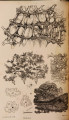
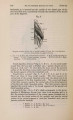
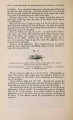
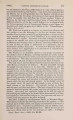
Show 1869.] DR. J. S. BOWERBANK ON SILICEO-FIBROUS SPONGES. 75 and effete fluids of the animal are on the same principle as artery and vein in the higher animals, the excurrent canals having their minute origins near the terminations of the incurrent canals. But this distribution of the two systems does not obtain in all massive sponges. In some species of symmetrically oval or nearly spherical forms we find a modification of the system that obtains in the cup-shaped sponges, the inner portion of the cup being replaced by a large central cloacal tube into which the effete streams from the sponge are poured, and from the mouth of which they are projected, in many cases with a considerable degree of force. This system is well exemplified in the genus Grantia. A m o n g the siliceo-fibrous sponges, we recognize the same principle in Iphiteon beatrix (Aphrocallistes beatrix, Gray), which in every other peculiarity of its skeleton is truly an Iphiteon. This variation in its habit from the cup-shaped siliceo-fibrous sponges is not sufficient to constitute it a separate genus, as we frequently find in the same species of sponges (as in Halichondria panicea) that one individual is massive with simple surface-oscula, while larger specimens, in addition to the surface-oscula, have several large cloacal appendages, receiving the excurrent streams in their cavities and discharging them from a c o m m o n orifice. Such modifications of the excurrent system prevail to a very considerable extent in many other sponges ; but the type of the skeleton-structure, which should always form the basis of generic characters, is never found to vary under any circumstances. The descrimination of the genera and species of the siliceo-fibrous sponges is by no means a difficult task if we address ourselves to the operation with a sufficient degree of care and attention. In our determination of genera it is necessary that the skeleton-structures should be examined in sections parallel to the surface of sponge, as well as in those at right angles to it, as the general aspects of these two sections are essentially different. Thus in Iphiteon callocyathes a section of the skeleton at right angles to the confluent radial strata presents no appearance of the rotulate arrangements of the fibre that are so characteristic of the genus ; and in Myliusia the crypt-like form of the skeleton is only distinctly visible in a section at right angles to its surface. The most efficient and striking specific characters are to be found in the expansile dermal system, in the spicula of the dermal membrane, and in the peculiarities of the structure of the connecting spicula. The characters derivable from the skeleton-fibre are often very effective; but in several of the species they so closely resemble each other as to be relatively of very little value as distinctive characters, while in no two of the known species of siliceo-fibrous sponge have we ever seen the same forms of connecting spicula and spicula of the dermal membrane occurring together. In the discrimination of species we should especially note the peculiarities of this interesting and beautiful dermal organism; and a portion ot it should be boiled in nitric acid to obtain the spicula contained in it in a separate state. |