| OCR Text |
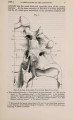
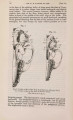
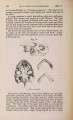
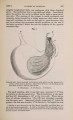
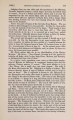
Show 1869] THE MALLEUS AND THE INCUS OF THE MAMMALIA. 403 Thus I find myself compelled to dissent from every one of Prof. Peters's conclusions ; but, in working over the ground again, I have also been led to depart from the Reichertian view (which I have hitherto adopted) in one point, and that a very important one. In a young mammalian foetus, Meckel's cartilage passes, above, directly into the malleus ; and at no time is any articulation developed between the malleus and the rest of the cartilage. Further, the incus articulates by a broad surface with the malleus, and its dimensions are such that its long axis appears to continue that of the malleus and Meckel's cartilage. In fact it appears exactly as if the incus were the proximal end of the cartilage of the first visceral arch. If so, the articular surface between the incus and the malleus must needs answer to that between the quadratum and the articulare of the Sauropsidan; and as the incus and the malleus ossify, nothing can seem closer than the resemblance which they bear to the quadratum and the articulare respectively. Hence Reichert conceived that the quadratum was the homologue of the incus, and the malleus that of the articulare, and I have followed him. But the study of Sphenodon and of the Crocodile has led me to believe that we have fallen into an error. It is admitted, on all hands, and indeed cannot be disputed, that the stem and fenestral plate of the stapedial apparatus of the Sauropsidan answer to the crura and fenestral plate of the stapes of an ordinary mammal. But the incus of a mammal is related to the stapes on the one hand, and to the walls of the tympanic cavity on the other, nearly as the suprastapedial of a Crocodile is to the same parts ; if the incus remained cartilaginous the resembance would be complete. On the other hand, in the human foetus, the stapes has a cartilaginous prolongation which is embraced by the stapedius muscle, and contributes to reduce the interval between the stapes and the upper extremity of the cartilaginous styloid process (or upper end of the hyoidean arch) to a very small space. Thus, in the Mammal, the proximal end of the hyoidean arch is in nearly the same condition as in the Crocodile, except that- (1) There is a distinct articulation between the suprastapedial part and the stem of the stapes. (2) The extrastapedial portion of the stapes is no longer distinguishable, and the stapes has lost its direct connexion with the tympanic membrane. (3) The suprastapedial is ossified and converted into an incus. The incus, therefore, cannot be the homologue of the quadratum. If this view be correct, it follows that as the malleus is the ossified proximal end of the cartilage of the first visceral arch, the malleus must represent the quadratum. And thus the difference between the Sauropsidan and the Mammal will be, that in the latter the cartilage of the first visceral arch does not become jointed, and does not develope any representative of the articulare ; while it gives off an extrastapedial process, which becomes connected with the middle of the tympanic membrane. Thus, in principle the Reichertian doctrine still holds good ; but |