| OCR Text |
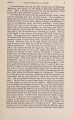
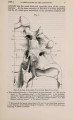
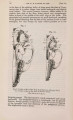
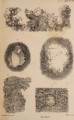
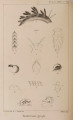
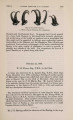
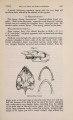
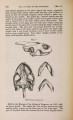
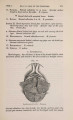
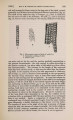
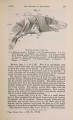
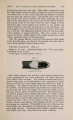
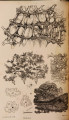
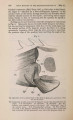
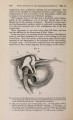
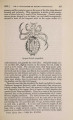
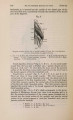
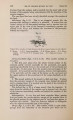
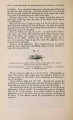
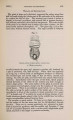
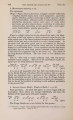
Show 332 DR. J. s. BOWERBANK ON SILICEO-FIBROUS SPONGES. [May 13, its delicate structure, and the total absence of dermal spicula, it is evident that it has formed no part of the expansile dermal system, and that it is truly the enveloping membrane of the rigid skeleton of the sponge thickly covered by sarcode. Whether these minute molecules are the basal vesicles of the ciliary system is a question of considerable interest, to be hereafter determined by naturalists who have the opportunity of examining these interesting sponges fresh from their native element. Their situation and general character are very similar to the homologous organs in Grantia compressa, and their position in J. Ingalli is just that in which we should expect to find the ciliary system. We cannot hope to find any cilia remaining under such circumstances; those of Grantia compressa and other nearly allied species are rarely visible, except during the life of the animal and while in a state of activity. In a small piece of the membranous structure of this sponge which I received from m y friend M r . Ingall, in March 18G0, the appearances presented are widely different from those of the membrane I have described above. The colour and the sarcode are very similar; but there is a total absence of the minute spherical bodies. The field of view presents a very confused appearance. Numerous long, slender, and flexible attenuato-acerate spicula are confusedly matted together, and amongst them there are a considerable number of large rectangulated hexradiate spicula with radii of equal length, gradually attenuated from their proximal to their distal terminations ; and amidst this complicated mass there are innumerable spinulo-quadrifurcate hexradiate stellate retentive spicula. From what part of the sponge these portions of its structure have been derived it is difficult to conjecture ; but it is evident that there are other forms of spicula than those we have observed in situ that belong to it, and that, although the spinulo-quadrifurcate retentive spicula are rather abundant in the interstices of the rigid skeleton, there are other parts of the sponge in which they are crowded to such a degree as to be innumerable. The general appearance of the spinulo-quadrifurcate hexradiate spicula is very like that represented by fig. 2, Pl. XXIII.; and I have chosen a mutilated specimen which has only three of its primary rays remaining as best calculated to display its quadrifurcate structure. The configuration of the rigid skeleton is decidedly that of an Iphiteon of a somewhat delicate structure. The skeleton-fibres near the surface are rather strongly tuberculated; but those of the interior are very much less so, and in some parts they are almost smooth. The mouths of the incurrent canals on the surface of the rigid skeleton are numerous and frequently closely adjoining each other, the separation often not exceeding half of their own diameter. The auxiliary fibres at some distance within these canals are frequently abundant and m u c h complicated in structure. They are stout, very rugged, with irregularly disposed tubercles, and their free terminations are spinulate. The rectangulated hexradiate interstitial spicula in situ are few in number, and their radii are gradually |