| OCR Text |
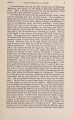
Show 508 MR, R. n. SHARPE ON THE GENUS CEYX. [Nov. 11, Turin, on the subject of these birds ; for, curiously enough, we had been each of us, unknown to the other, gathering materials for a monograph of the genus. In November last I had the honour to lay before the Society the results of m y labours; but, as is so often the case even with the most painstaking ornithologist, no sooner had I published m y paper and finished, as I hoped, satisfactorily, than specimens reached m e which entirely overthrew my conclusions, and obliged m e to recommence m y studies afresh. It may be as well to recapitulate the leading facts of my arrangement of the genus Ceyx. I proposed to divide it into two section--, viz. those with the head lilac-rufous, and those with the head black-spotted or banded with cobalt. I have little to say with regard to the birds included in the latter section; but concerning the rufous-headed Ceyces I find it necessary to add a few remarks. I admitted four species belonging to this section, as well characterized and distinct, viz. C. rufidorsa, Strickl., C. dillwynni, Sharpe, C. tri-dactyla (Pall.), and C. melanura, Kaup. As to the specific distinctness of these species I entertained no doubt, and fondly imagined that the last point of the vexata queestio of the true Ceyx tridactyla had been settled. Scarcely, however, had I congratulated myself on this happy result when I received from Lord Walden a specimen of a rufous-headed Ceyx which completely upset my equanimity. I had taken the blue spot on the side of the neck as a good characteristic whereby to separate the rufous-headed Ceyces into two subsections, viz. those which possessed this blue spot, and those in which it was absent. In C. rufidorsa and C. dillwynni it is not found. Both Count Salvadori and myself had never seen the true Ceyx rufidorsa from Malacca, and Strickland's type was at that time inaccessible, as the collection was packed up at Cambridge awaiting its removal into the museum of that town. W e had, however, concluded that the Sumatran bird, of which we had seen several, was identical with the Malaccan; and Strickland's description seemed to confirm this view. The first specimen from the Malayan peninsula that I had seen was kindly lent me by Lord Walden, and on its receipt I rather hastily concluded that this must be the true C. rufidorsa of Strickland. It was a bird with a blue ear-spot and black scapularies ; and there is nothing in Strickland's description that would lead one to suppose that his C. rufidorsa possessed neither of these characters. Here is his diagnosis*:- " CEYX RUFIDORSA, Strickland. " C. capite, dorso, tectricibus caudaque totis leete rufis, splendore lilacino variantibus ; corpore subtus aurantio-flavo, mento albo, loris et macula aurium obscure cceruleo-nigra. " This species, which also occurs at Malacca, is very closely allied to the last [_C. tridactyla], but differs in having the beak larger in all its dimensions, and in having the whole back and wing-coverts, as well as the crown, rump, and tail, rufous, with a brilliant lilac tint. The dark blue spot on the front and ears is much less marked than * P. Z. S. 1846, p. 99. |