| OCR Text |
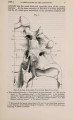
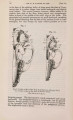
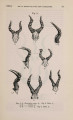
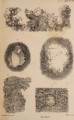
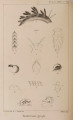
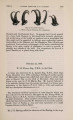
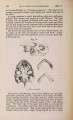
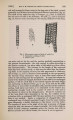
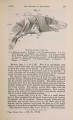
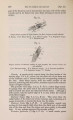
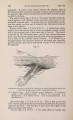
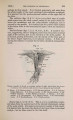
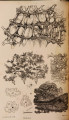
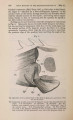
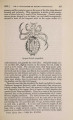
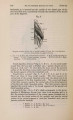
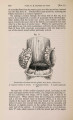
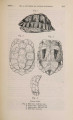
Show 72 DR. J. S. BOWERBANK ON SILICEO-FIBROUS SPONGES. [Jail. 28, of which I have been treating at right angles to their surfaces and then mount them in Canada balsam without previously immersing them in water, we frequently find portions of their surfaces in which the expansile dermal membrane has dried without having come into close contact with the rigid skeleton beneath it, and we see the shafts of the connecting spicula pendent from the inner surface of the dermal membrane and freely suspended in the intervening space ; and under these circumstances we also frequently see a secondary thin brown dermal membrane closely adhering to the surface of the rigid skeleton. Fig. 6, Plate V., represents such a section from Dactylocalyx Prattii. When the expansile dermal system in Dactylocalyx Prattii has been removed, we find the surface of the rigid skeleton closely covered by this continuous enveloping membrane, which in its present condition is closely adherent to the external surface of the rigid skeleton : while this membrane is in its natural state and position, no orifices whatever are observable in it; but when it is removed, we find immediately beneath it, on the surface of the rigid skeleton, a vast number of incurrent orifices of about the average diameter of one-third of a line. They are very evenly dispersed at about three or four times their own diameter from each other. That the enveloping membrane above them should appear imperforate is perfectly natural while the sponge is in a quiescent state; and there is no doubt that when requiring nutriment, imbibing-pores would be opened above each of the incurrent canals of the skeleton, in the same manner as in Geodia and numerous other similarly constructed sponges. From the lengths of the shafts of the connecting spicula, which vary in some species from y^-jj to -$4^ inch, we may estimate tolerably closely the range of the contractile and expansile capabilities of the dermal system ; and it is exceedingly probable that this space contains the aerating organs of the animal, and is truly the homologue of the large intermarginal cavities that are so numerous in the dermal crust of Geodia Barrettii and other closely allied sponges (see Phil. Trans, for 1862, pl. 32. fig. 2, a a, p. 788; and ' Monograph of British Spongiadas,' vol. i. pl. 28. fig. 354, a a, p. 171). And this idea is rendered more probable by the existence of the innumerable spherical vesicles on the corresponding membrane of Iphiteon Ingalli, which have every appearance of being the basal cells bearing the vibratory cilia during the life of the animal. The most decisive and valuable specific characters are those derived from the connecting spicula. They vary to a very considerable extent in different species in both size and form ; but whatever may be the shape of their apical radii, their mutual connexion is always so ordered that not only is there abundant means for their combined mass to expand at right angles to the surface of the rigid skeleton, but there is always ample room for a great amount of expansion and contraction in a lateral direction ; and however complicated or eccentric may be the radii of their apices when seen separately, when in situ they always form a compact reticula- |