| OCR Text |
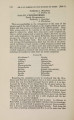
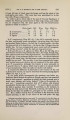
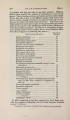
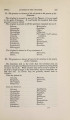
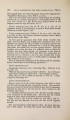
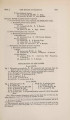
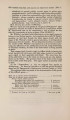
Show 1874.] ANATOMY OF THE PARROTS. 597 As far as the major division is concerned, the facts brought forward in the present communication suggest a different arrangement, as shown above, which would approximately distribute these subfamilies thus:- Family I. Family II. Stringopida. Arina. Lorina. Platycercina (in part). Cacatuina. Psittacina (in part). Platycercina (in part). Nestorina. Psittacina (in part). The generally received families Platycercinae and Psittacinae are avowedly rather incongruous mixtures. Mr. Gould, with acute perception, was able to differentiate Aprosmictus from Platycercus, chiefly by its habits of life ; and anatomical considerations show that Dr. Finsch's attempt to reabsorb it in the older genus is a retrograde step. If Dr. Meyer is right in stating that the sexes in Eclectus axe of different colours, its relations to Aprosmictus may be very intimate. It may at first sight seem very heretical to remove Lathamus from the Lorinae, the brush-tongue being considered characteristic of that subfamily. To the unbiased student, however, the brush-tongue is a character not more important than several of those that have been above considered. It is only an excessive development of the papillae which are always present on the lingual surface, and is seen in a slightly different form in the lion and other Felidae. The character of the papillae is somewhat different in Lathamus from what it is in Lorius, they being blunter and shorter in the former genus than in the latter. The totally different geographical distribution of Palaornis and the true Arinae is quite opposed to Dr. Finsch's proposition that Conurus and Brotogerys should be the neighbours of the Palsearctic genus. Brotogerys entirely agrees in structure with Chrysotis and Pionus, differing greatly from Conurus ; whilst in itself Conurus, as generally received, embodies the red-tailed species, with the fourth primary not acuminate, and the green-tailed species, with an acuminate fourth primary. In the former section (Pyrrhura) the ambiens muscle is quite lost, whilst in the latter (Conurus) it is always well developed. Prof. Huxley is not the only naturalist who has been puzzled by the geographical distribution of Psittacula. This genus in its wide sense, however, is broken up into far separated genera-the Old- World Psittinus and Agapornis differing entirely from the New- World Psittacula, Agapornis being the homologue, as it may be termed, in the normal-carotid Parrots of Psittacula in the other group, whilst Psittinus is a less-differentiated genus of the former division. Nestor no doubt stands rather isolated ; but possessing the ambiens muscle, as well as all the other characters of Psittacus and the true Arinae, it must be classed with them. M y subfamily Pyrrhurinae seems a mixture ; and all I can say in |