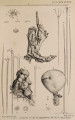
| OCR Text |
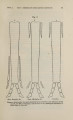
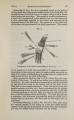
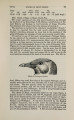
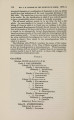
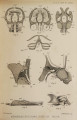
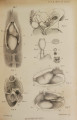
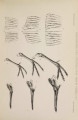
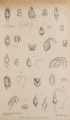
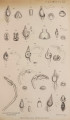
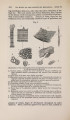
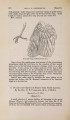
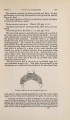
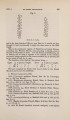
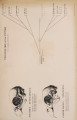
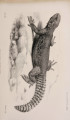
Show 1874.] REV. O. P. CAMBRIDGE ON N E W DRASSIDES. 407 spur issuing backwards from the hinder extremity on the outer side is red-brown, a little bent, sharp-pointed, tapering, and thorn-like ; its length is moderate, less than half the length of the joint, and it points outwards. The palpal organs are of the usual form, and almost encircled by a tapering, sharp-pointed spine, which issues from near the middle of their outer side. The falces are moderately long and strong, but less so than in many others of this genus ; they project forwards, but are straight and do not diverge laterally from each other. The abdomen is not very large; it is oval, and projects a little over the base of the cephalothorax; it is clothed with pale silky hairs, and there are some darker prominent ones on the fore part of the upper side. The spinners are yellow and rather short; the second joint of the superior pair is very short; the inferior pair are much the strongest. The female is a little larger than the male, but similar in colour and other general characters. The genital aperture is short, transverse oval, broken into at the middle of its fore side, and having a strongish yellow-brown, corneous-looking margin. The legs of this sex are also shorter and proportionally stronger than those of the male. An adult example of each sex were found in the collection received from Bombay from Major Julian Hobson. CHEIRACANTIHUM ISIACUM, sp. n. (Plate LII. fig. 31.) Adult male, length 3\ lines; adult female 4 lines. In general form and characters this Spider is very like the European species C. carnifex. The cephalothorax is not very convex above; it is of a yellow colour, clothed with short, fine, pale hairs. The ocular region is strongly suffused with blackish brown ; and from each of the hind central pair of eyes an indistinct tapering stripe of the same runs backwards towards the junctional point of the thoracic segments; the normal grooves and indentations are well marked by converging dusky stripes. The eyes are on black spots in the usual position ; they are rather small, and do not differ greatly in size. The height of the clypeus is no more than half the diameter of one of the fore central pair of eyes, which are largest of the eight; those of each row severally appeared to be as nearly as possible equidistant from each other, the four central eyes forming very nearly a square, the transverse, however, being rather longer than the longitudinal diameter; those of each lateral pair are slightly obliquely placed on a tubercle, but not quite contiguous to each other. The legs are long, moderately strong, their relative length being J, 4, 2, 3 ; their colour is yellow, rather paler than the cephalothorax, furnished with hairs of different length and strength, and more than the ordinary number of spines ; the most characteristic of these (in the male) are a single longitudinal row of about 12 or 13, not very long, but tolerably strong, beneath the metatarsi of the fourth pair, several others with the last one of this row forming a |