| OCR Text |
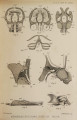
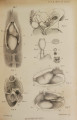
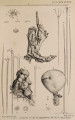
Show 1874.] RESPIRATION OF FRESHWATER FISHES. 317 diaphragm. It remained for a long time vertically suspended in the water, with the extremity of the snout at the surface, taking in air, which occasionally passed upwards in bubbles from the gill-openings and from the anus. On some occasions, on being disturbed, it would rise from the bottom, quickly attain the surface, and almost immediately afterwards discharge a considerable amount of air from the anus. Exp. 7.-Two specimens of Anabas scandens*, the Common Climbing Perch of India, were placed in a glass jar, and a diaphragm of net fixed at about 1 inch beneath the surface of the water. Almost immediately on being placed in the water the fishes rose and attempted to reach the surface. They continued their attempts for about five minutes, striking vigorously against the net; they then sank down, and died in twelve minutes from the time they were prevented from having access to the surface of the water. Exp. 8.-A specimen of Trichogaster fasciatus was placed in the same glass ; and immediately after it had been observed to rise to the surface of the water the netted diaphragm was fixed half an inch beneath the surface-at 12 noon. Two minutes afterwards it again attempted to rise, but, being repulsed by the net, swam about, seeking for some means of exit. During the succeeding hour it frequently rose towards the surface and struck violently against the net and the sides of the vessel, the respiration becoming much affected, the gill-covers moving very rapidly. At 3 P.M. the fish lay at the bottom of the jar on its side; at 3.20 P.M. it again attempted to reach the surface, but had lost the power of maintaining its equilibrium, and moved convulsively about with the abdomen upwards; at 3.30 P.M. it lay expiring at the bottom of the jar. The net was now removed; and the fish succeeded by a violent effort in reaching the surface of the water, when it quickly drew in some air and again sank to the bottom. It appeared much revived, but still lay with the abdomen upwards. Soon afterwards it rose again to the surface, and remained suspended vertically in the water with the extremity of the snout at the surface, and continued in this position for some minutes. Again it sank downwards, but appeared better able to maintain its equilibrium. After rising several times to the surface the fish regained completely the power of maintaining its equilibrium, appeared nothing the worse for what it had suffered, and swam about as usual. The same experiment was repeated with the same fish on the following morning. It was placed in pure well-aerated water. The same results took place; and it died in four hours and a quarter. Exp. 9.-Placed a specimen of Ophiocephalus striatus, 11 inches long, in the glass jar, and fixed the netted diaphragm 1 inch beneath the surface of the water. After seven minutes the fish became uneasy, and frequently rose towards the surface, but was repulsed by the net. Five minutes afterwards it rushed with great force against the net, burst one of the meshes, and passed through it to the sur- * The accessory respiratory organs of this fish are described in ' Owen's ' Anatomy of Vertebrates,' vol. i. p. 487. |