| OCR Text |
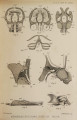
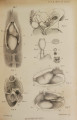
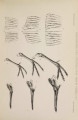
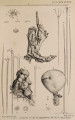
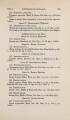
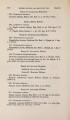
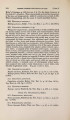
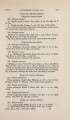
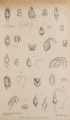
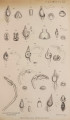
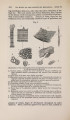
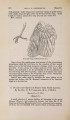
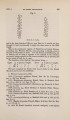
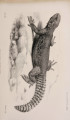
Show 300 DR. J. S. BOWERBANK ON THE SPONGIAD^. [May 5, spicula afford the most prominent specific characters of the species. The normal form is that of a regular attenuato-expando-ternate connecting spiculum, the three radii of which are as nearly as possible equal; but they are very rarely found in this state. Sometimes one or two of the terminal radii are absent or only partially developed, or one or more of them terminate hemispherically. If the radii are completely produced, their apices are mostly recurved or they assume various contortions. If 1 had had the type specimen only for examination, I might have imagined that these malformations and contortions of the radii were those of the individual only ; but I carefully examined microscopically the other three specimens to see whether their spicula agreed in the imperfect development of the radii of the ternate connecting ones of the type specimen ; and I found in all of them the same contorted or undeveloped condition of their radii that forms so striking a character in the type one. The interstitial membranes are abundantly furnished with the two forms of stellate retentive spicula, which, from their structural peculiarities, afford very efficient specific characters. The sphero-stellate ones with cylindro-subfoliate radii are rather the more numerous of the two forms: they do not differ to any great extent in their diameter; a perfectly developed one measured extreme diameter rsV"s m c n - The attenuato-stellate ones vary considerably in their amount of development; many of them have comparatively a small number of radii, and in such cases they are frequently subsphero-stellate : but this does not appear in the fully developed forms, where the radii are too numerous to be counted ; a large one of this description measured extreme diameter y-gW incn- The ovaria are more or less oval and are depressed to a considerable extent; their length is frequently nearly twice thr.t of their diameter. They are abundantly dispersed on the surfaces of the interstitial membranes, and may be seen in every stage of development, from a minute multistellate form to that of the adult ovarium. GEODIA RETICULATA, Bowerbank. (Plate XLVI. figs. 14-20.) Sponge massive, sessile. Surface smooth, minutely reticulated. Oscula small, congregated irregularly. Pores inconspicuous, evenly dispersed. Dermal membrane unknown. Skeleton-fasciculi compact, abundantly spiculous ; spicula fusiformi-acerate, rather slender ; connecting spicula attenuato-patento-ternate, stout and long, numerous, radii moderately long; and recurvo-ternate long and rather slender, numerous ; also, rarely, porrecto-ternate long and slender. Interstitial membranes-tension-spicula fusiformi-acerate small and slender, often flexuous; retentive spicula attenuato-stellate very numerous, radii few ; also cylindro-stellate, exceedingly abundant and very minute, radii rather numerous. Ovaria small, spherical, rather numerous. Colour in the dried state cream-white. Hab. Mexico (Mr. Thos. Ingall). Examined in the dried state. I received this sponge from my late friend Mr. Thos. Ingall, |