| OCR Text |
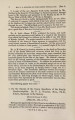
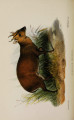
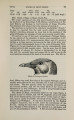
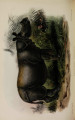
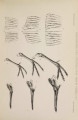
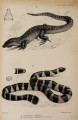
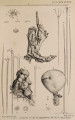
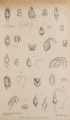
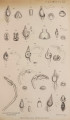
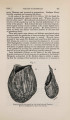
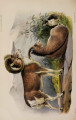
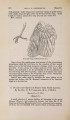
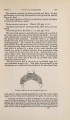
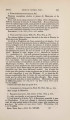
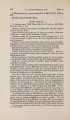
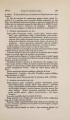
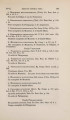
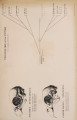
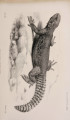
Show 1874.] THE S E C R E T A R Y O N A D D I T I O N S T O T H E M E N A G E R I E . 247 May 5, 1874. Dr. E. Hamilton, V.P., in the Chair. The Secretary made the following report on the additions to the Society's Menagerie during April 1874 :- The total number of registered additions to the Society's Menagerie during the month of April was 119; of which 11 were by birth, 51 by presentation, 45 by purchase, and 12 received on deposit. The total number of departures during the same period by death and removals was 61. The most noticeable additions during the month were :- I. A male Vigne's Sheep (Ovis vignii, Blyth), presented by Captain Archibald, April 7th, being the first example of this animal brought alive to Europe. 2. A White-cheeked Flying Squirrel (Pteromys leucogenys, Tem-minck) from Japan, presented by Mr. A. Gower, H.B.M. Consul at Hiogo, Japan, April 15th ; likewise the first example received. 3. The typical example of Halmaturus luctuosus of D'Albertis (described anted, p. 110), deposited by Signor L. M . D'Albertis, C.M.Z.S., April 17th. This is certainly a new and most interesting form of Kangaroo, remarkable for its narrow elongated face, short ears, and the naked extremity of the tail, with which alone it touches the ground in moving. It will probably be found to belong to a new genus ; but an examination of the teeth is necessary to decide the point. The drawing by Mr. Keulemans, which I exhibit (Plate XLII.), will render its external form easily recognizable. The single known specimen, as previously mentioned, was obtained by H.M.S. ' Basilisk' at the southern extremity of N e w Guinea, and brought to Sydney, where it was purchased by M . D'Albertis. 4. Four Bladder-nosed Seals (Cystophora cristata), brought from the Arctic Seas, and presented by Captain D. Gray, of the S.S. •Eclipse,' and Captain Alexander Gray, of the S.S. 'Labrador,' April 24th. One of them is a fine male, larger than any we have yet had, supposed to be about two years old. Mr. Sclater called the attention of the meeting to the Cassowary in the Society's Gardens, received from the Zoological Society of Amsterdam in 1871*, and described and figured in the 'Proceedings' for 1872 (p. 147, pi. ix.) under the name Casuarius kaupi, which was now a fine adult bird. It now appeared, from Professor Schlegel's remarks in the recently published part of the ' Musee des Pays-Bas,' and from Hr. v. Rosenberg's article in the * Journal fur Ornithologie' for 1874 (p. 390), that there could be no longer any doubt that the name Casuarius kaupi of Rosenberg had been founded on a young example of C. uniappendiculatus. It remained, therefore, to find another name for the present bird. Mr. Sclater had * See P. Z. S. 1871, p. 627. |