| OCR Text |
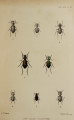
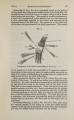
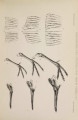
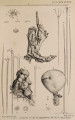
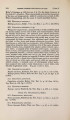
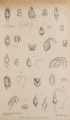
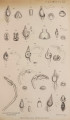
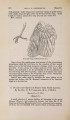
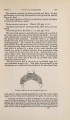
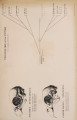
Show 1874.] REV. O. P. CAMBRIDGE ON NEW DRASSIDES. 403 Several immature examples were found by myself under stones among the ruins of the Baths of Caracalla in February 1865 ; and more recently I have received an adult example of each sex from Spain: these do not differ from the immature examples described by Mr. Blackwall and Dr. L. Koch in colours and markings and general characters ; the male, however, has the upper surface of the abdomen shining and coriaceous, and the double row of long strong sessile spines beneath the tibiae and metatarsi of the first and second pairs is very conspicuous. The palpi of the male are of a deep black-brown colour, but neither very long nor strong ; the radial joint is about the same length as the cubital, and has its fore extremity produced over the base of the digital joint into a longish, tapering, curved, sharp-pointed apophysis. The digital joint is large and exceeds in length the radial and cubital joints together; itis of an oblong-oval form, and its extreme point obtuse. The palpal organs are simple, consisting of a roundish lobe, from near the middle of which a corneous tapering spiny process runs backwarks and round the inner side and fore extremity. The colour of the cephalothorax is deep black-brown, and in both sexes is furnished with some short iridescent hairs. The legs are long and slender, of a black-brown colour, getting lighter towards their extremities. The tarsi, as well as a small portion at the fore extremity of each tibia, are of a pale yellow colour ; this is most marked in the female. The spines beneath the tibiae and metatarsi have been before referred to. Each tarsus ends with two claws, springing from a small supernumerary or heel-joint; and beneath them is a very small scopula. The abdomen of the female is black, with an oblique whitish line on each side at the fore extremity, and a transverse, slightly curved, white line or narrow bar a little way above the spiuners; this white line was almost imperceptible in the adult male, but very conspicuous in the female ; on the upper surface of the abdomen of this sex are a few short iridescent hairs. The form of the genital aperture, shown in the figure, is characteristic. Genus CHEIRACANTHIUM (Koch). CHEIRACANTHIUM DUBIUM, sp. n. (Plate LII. fig. 28.) Adult male, length 3 lines. This Spider is of great interest, approaching so nearly as it does to the genera Drassus and Clubiona. Were it not that the relative length of the legs differs from that of those genera and coincides with that of Cheiracanthium (1, 4, 2, 3, instead of 4, 1, 2, 3), I should have been inclined to describe it as a Clubiona. The whole of the fore part is of a dull-orange yellow-brown colour the falces being rather darker than the rest. The abdomen is of a flatfish oval form, rather truncate at its hinder extremity ; its colour is a pale straw-yellow ; an elongate-oblong, central, longitudinal, dull brown marking occupies the fore half of the upperside ; this is followed towards the spinners by several angular bars or chevrons (of the |