| OCR Text |
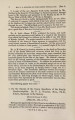
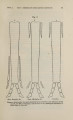
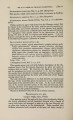
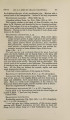
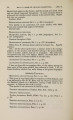
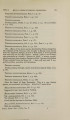
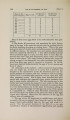
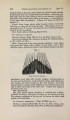
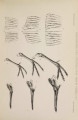
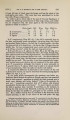
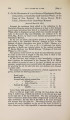
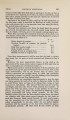
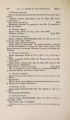
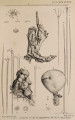
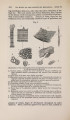
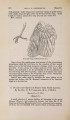
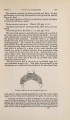
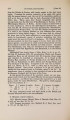
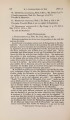
Show 466 MESSRS. BLACKMORE AND ALSTON [June 16, The recent skulls of A. ratticeps present considerable variations, though not to the extent shown in the fossils. In some the first lower molar shows a slight approach to the prolongation of the anterior extremity alluded to above; and Blasius himself remarks that the variation in the last upper tooth may lead to the formation of false species (I. c. p. 368). W e must therefore regard the fossil animal as either identical with the recent, or as so nearly allied as not to be separable by the materials which remain to us. The recent range of this Vole extends from Scandinavia (where Nilsson described it as Lemmus medius) through Lapland, North Russia, and Siberia as far as Kamtschatka. The most striking character in its dentition is the manner in which the first two external angles of the first lower molar are blended in a broad convex pillar. The pattern is :- Upper I. 5 spaces, 6 angles. Lower I. 7 spaces, 9 angles. II. 4 „ 5 „ „ II. 5 „ 6 „ „ III. 7 „ 7 or 8 „ „ III. 3 „ 6 „ W e have examined all the specimens above referred to, and have compared them with recent skulls in the British Museum and in our own collection. 4. ARVICOLA NIVALIS, Martins. 1873. Arvicola nivalis, C. J. Forsyth Major, Atti Soc. Ital. Sc. Nat. xv. p. 584. Dr. Forsyth Major has recently announced the discovery of the remains of this alpine species in the Cavern of Levrange in Lom-bardy. A single jaw found along with these, of the last species, at Fisherton, has much the character of A. nivalis in the form of the first molar (fig. 2, g, p. 465) ; but the variation in the other teeth among which it was discovered leads us to hesitate in describing the species as British until further evidence is obtained. At the present day this species seems to be confined to the Alps of Central Europe, where it is found at an elevation of not less than 3000 feet above the sea-level; according to De Selys Longchamps it also inhabits the Pyrenees. The dentition does not appear to be liable to much variation. The anterior extremity of the first lower molar is convex, passing at once into the first exterior or internal angles. The pattern is :- Upper I. 5 spaces, 6 angles. Lower. I. 8 spaces, 9 angles. ,, 11. 4 ,, 0 ,, ,, 11. 0 ,, 0 „ „ III. 6 ,, 6 „ „ III. 3 ,, 6 „ We have compared the single jaw figured with recent skulls of A. nivalis from Switzerland in the British Museum. 5. ARVICOLA BRECCIENSIS (Giebel). 1825. Campagnol de Cette, de Corse, et de Sardaigne, Cuvier, Oss. Foss. iv. p. 225, v. pt. i. p. 54. |