| OCR Text |
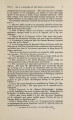
Show 1874.] MOLOTHRI OF BUENOS AYRES. 161 bird that laid the additional five eggs before had gone away on finding herself robbed. The birds still remained ; and when I had reason to believe that they had commenced to lay the fourth time, I visited the nest and found two eggs in it; I left them, and returned in three days expecting to find five eggs, but found seven ! Certainly more than one female had on this occasion laid in the nest. I have invented several theories to account for the additional eggs ; but they are not satisfactory, and it is useless to record conjectures. After taking the last eggs, the Bay-wings left; and though the Molothri ru-foaxillares continued to make rather frequent visits to the nest, to my great disappointment they did not lay in it. Last summer (1871-2) I found one nest of the Bay-wings ; it was deep and nicely made of long dry grass and fibrous roots. All the other pairs I observed bred in nests of other birds, most of them in Lefiateros' nests. This summer (1872-73) all the pairs of Bay-wings I have observed have laid in the nests taken from other birds. VI. Habits of Molothrus rufoaxillaris.-This species is by no means rare, though not so abundant as the others ; probably its close resemblance to the M. bonariensis kept it so long unknown to ornithologists. Like the M. badius, it remains with us the whole year. The M. rufoaxillaris is never seen alone; nor are they strictly gregarious, but in winter go in parties never exceeding five or six in number. One of its most noteworthy traits is an exaggerated hurry and bustle it throws into all its movements. When passing from one branch to another it goes by a series of violent jerks, smiting its wings loudly together ; and when a party of them return from the fields they rush wildly and screaming to the trees, as if pursued by a Falcon. Their language is as abrupt as are their motions. They are not singing birds ; but the male sometimes, though rarely, attempts a song, and utters, with considerable effort, a few brief and unmelodious notes. Tiie chirp with which he invites his mate to fly has the sound of a loud aud smartly given kiss. His warning or alarm note when approached in the breeding-season has a soft and pleasing sound; it is his only mellow expression. This most common as well as remarkable vocal performance is a cry beginning with a hollow-sounding internal note, and swelling into a sharp metallic ring ; it is uttered with tail and wings spread and depressed, the whole plumage raised like that of a strutting turkey-cock, whilst the bird hops briskly up and down on its perch as if dancing. From its manner of puffing itself out, and from the peculiar nature of the sound it produces, I believe that, like the Pigeon and other species, it has the faculty of filling its crop with air, using it as a " chamber of resonance." The note I have described is quickly and invariably followed by a scream, harsh and impetuous, uttered by the female, though both notes always sound as if proceeding from one bird. Frequently, when the flock is on the wing, these screaming notes without the prelude are uttered by all the birds in concert. The plumage of this species has a strong musky smell; the oesophagus is remarkably wide. It lives almost exclusively on seed; but sometimes a large caterpillar or spider is also found in the stomach. |