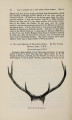
| OCR Text |
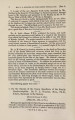
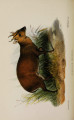
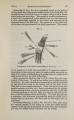
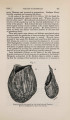
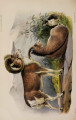
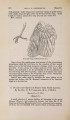
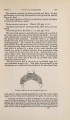
Show 90 DR. O. FINSCH ON A NEW PARROT. [Jan. 20, this species had been called Capra picta,Erhardt*. But there seemed to be little doubt, upon further examination, that the Wild Goat of Crete and the Cyclades, known since the days of the Odyssey f, was not really separable from Capra agagrus (Pallas) of Western Asia. Mr. Busk had kindly examined the skull of the present specimen, and quite agreed with this identification. Blasius('Saugeth. Europas,' p. 483) had spoken of the Wild Goat of Crete and the Cyclades as Capra beden, but without giving any authority for this statement. Mr. Sandwith had furnished the following note on the occurrence of Capra agagrus in Crete:- " The Cretan Ibex is found on the slopes of Mount Ida and on the White Mountains, both of which attain a height of 8000 feet. " Living amidst inaccessible rocks at an elevation of 4000 feet and upwards, they are seldom molested, being only occasionally shot by shepherds ; and the island being free from beasts of prey, m a n is the only enemy they have to fear. The female sent to the Society's Gardens was procured from the White Mountains when a few weeks old; the two males were from Mount Ida, also taken when quite young. At first they were very wild, but soon grew tame, being fed chiefly on mulberry-leaves, and afterwards on barley and oats. "Two of these animals have recently been sent to Berlin." Mr. Edwin Ward, F.Z.S., exhibited two double hind feet of a Fallow Deer (Cervus dama), and read the following remarks:- "Amongst a herd of about 150 Fallow Deer belonging to Lady Churchill, of Cornbury Park, Oxon, there has existed a doe possessing a malformation consisting of double bind feet. " This doe has for several successive years dropped a fawn with the same malformation of double hind feet as her own. " The keepers state that the doe had been served by different bucks each year. The hind feet of her progeny never differed, but always partook of the shape of the mother's. " The division occurs in the upper part of the tarsus, which gradually diverges into two separate tarsi and two separate feet." The following papers were read:- 1. On an apparently new Species of Parrot from Eastern Peru. By O T T O F I N S C H , Ph.D., C.M.Z.S., &c., Curator to the Bremen Museum. [Received November 29, 1873.] PSITTACULA ANDICOLA, Sp. nOV. Diagn. Viridis unicolor, subtus dilutior ; mento olivaceo-fiavido ; rostro canescenti-corneo. Description.-Upper parts beautiful dark grass-green, rump and upper tail-coverts somewhat brighter; the feathers on the occiput * See Rev. Cat. Vert. p. 90. t See Odyssey, ix. 118 and 154. |