| OCR Text |
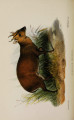
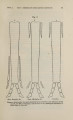
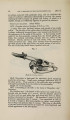
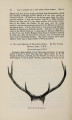
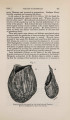
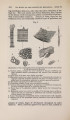
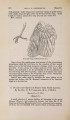
Show 1874.] SIR V. BROOKE ON THE GENUS CERVULUS. 33 considered them distinct unless he believed all the small Asiatic spotted cats to be of one species. Pallas, in the ' Zoographia Russica,' vol. i. p. 29, describes the Lynxes found in the Caucasus ; but they all have a short tail. The skius of the wild cat from there (p. 27) have four longitudinal black streaks on the forehead, three on the nape, and one dorsal streak. 4. On Sclater's Muntjac and other Species of the Genus Cervulus. By Sir V I C T O R B R O O K E , Bart., F.Z.S. [Received January 6, 1874.] (Plates VIII. & IX.) In a letter accompanying the specimens of Cervulus sclateri which are mentioned by Mr. Swinhoe in his description of that species (P. Z. S. 1873, p. 813), he expresses his desire that I should describe the species more fully and exhibit the specimens to the Society. The latter part of Mr. Swinhoe's request I have great pleasure in fulfilling this evening; the former Mr. Swinhoe has rendered very difficult, his description of the species being almost as exhaustive as the materials would admit. It has, however, occurred to m e that this may be a fitting opportunity for putting together in a concise form all that is known concerning the genus Cervulus, so as to form a basis for future observation and research. In the Prox furcata from the province of Schlesien (Steinheim), described and figured by Hensel (Zeitschr. d. deutsch. geolog. Gesellsch. 1859, xi. 251-279, T. 10, 11), we have the earliest geological occurrence of this form of Deer. The original specimens described by Hensel consisted of nearly the entire left frontal bone, with pedestal and horn complete, and of part of the superior maxillary. There is in the British Museum a cast of the former, which I have examined carefully; and the close similarity between it and a corresponding portion of the skull of Cervulus muntjac has astonished me, so much so that I have no hesitation in saying that, if the Miocene Muntjac's claim to specific distinction depended solely upon the characters afforded by this specimen, its claims would rest upon a very slender foundation. It cannot, however, I think, be doubted that the discovery of other parts of the skeleton of Prox furcata would reveal trenchant and interesting differences between this ancient form and the existing Muntjacs. The distribution of Cervulus, as represented by existing species, is, with perhaps the exception of Cervulus sclateri (which appears to extend into the north-western Palsearctic Region), confined to and coextensive with the Indian or Middle Palseotropical Region of Sclater, So far as the materials at m y command have enabled m e to form an opinion, there are but three definite and persistent modifications P R O C . Z O O L . Soc-1871, No. III. 3 |