| OCR Text |
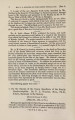
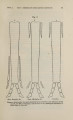
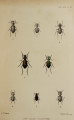
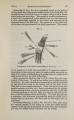
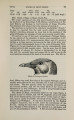
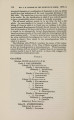
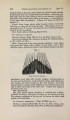
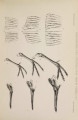
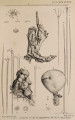
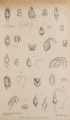
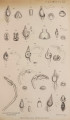
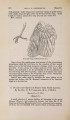
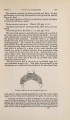
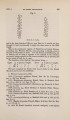
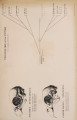
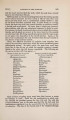
Show 1874.] NEW SPECIES OF ERIGONE. 429 appear to have been hitherto undescribed. Descriptions and figures of these new species are subjoined, as also of another of the same genus received from the Oregon Territory, where it was found by Lord Walsingham, who kindly sent it to me among some other Spiders. The discovery of Spiders of this curious group in North America is very interesting. It may be said now that the genus Erigone occurs over the greater part of the Northern hemisphere. I have received examples of it from Baikal (in the east) to Oregon (in the west), its southernmost limits at present known being Morocco and Cairo; and it has been sent to me also from North Greenland. The new species now described are brighter and more richly coloured than the greater portion of known European species ; and nearly all of them (though severally belonging to very distinct groups of the genus) have more or less of the caput black, the thoracic region being either yellow or rich orange; the occurrence of these two distinct, and distinctly defined, colours on the cephalothorax is unknown, so far as I am aware, in any of the numerous species found in Europe. From the information received from Mr. Emerton we may expect to find that North America will, when fairly searched, prove exceedingly rich in the species of these minute Spiders; and probably among them there will be found some presenting new and grotesque forms of the caput, and perhaps still more (apparently) eccentric structures in the palpi and palpal organs of the male than we find even now in many known species, while at the same time we shall probably find many among them identical, or nearly so, with European forms. M y thanks are especially due to Mr. Emerton and Lord Walsingham for giving m e the opportunity to describe and figure the subjoined novelties. Genus ERIGONE (Westr.). ERIGONE ATRA. Erigone atra, Bl. Edinb. Phil. Mag. iii. No. 15, p. 195. Neriene longipalpis, Bl. Spid. Great Brit. & Ireland, p. 274, pi. xii. fig. 188, and pi. xxii. fig. C. Erigone vagabunda, Westr. Aran. Suec. p. 597. A n adult male example, which I cannot distinguish from the above species, was contained in the small collection of the genus Erigone kindly sent me in January last from Boston, Massachusetts, U.S.A., by Mr. J. H . Emerton. It was found at Beverley, Mass., in June 1873. ERIGONE DENTIGERA, sp. n. Adult male, length very nearly 1| line. This species is very nearly allied to E. longipalpis (Sund.), both in size, colour, and form, but may easily be distinguished from it by a small but very distinct tooth-like spine beneath the radial joint of the palpus and by the less-pointed form of the fore extremity of that joint. |