| OCR Text |
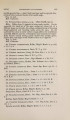
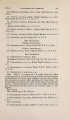
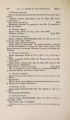
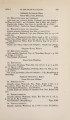
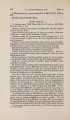
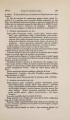
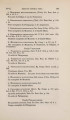
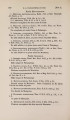
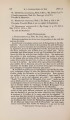
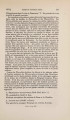
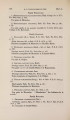
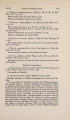
Show 1874.] MR. A. H. GARROD ON THE MUSCLES OF BIRDS. 121 situated peculiarly far from the cloaca. There is no aftershaft to contour feathers. Struthio has two carotids, Rhea only the left. 2. The genera Casuarius and Dromaus. They have the formula A B. X Y and B. X Y respectively. The ambiens muscle is absent, the caeca coli are short, and there is a very large aftershaft to the contour feathers. There are two carotid arteries. 3. Apteryx, in which there is an extra femoro-caudal muscle, the formula otherwise being A B. X Y. The ambiens is large ; the caeca coli are well developed ; and there is only one carotid, the left. 4- The Crypturi, with a formula A B. X Y. The ambiens muscle is large ; the caeca coli are well developed ; and an oil-gland is present, well tufted. The aftershaft may or may not be present on the contour feathers. /3. The Gallinacece all comprise B. X Y in their formula; the ambiens is present in all; and except in the Musophagida there are always caeca to the intestine. They are divisible into six families : - 1. The Palamedeida, with formula A B. X Y, the ambiens present, caeca sacculated as in Struthio and Rhea only, two carotid arteries, no aftershaft or a very small one, and a tufted oil-gland. 2. The Gallina, with formula A B. X Y or B. X Y. The ambiens is always present, as are caeca coli, an aftershaft, and a third pectoral muscle beneath the second ; the oil-gland may be strongly tufted, or the tuft may be very weak ; in the Megapodida it does not exist. The second pectoral is very long ; and there is a characteristic shape about the sternum. In the Megapodida there is only one carotid, the left; in all the others both are present. Neither Turnix nor Pterocles are included in this family. 3. The Pallida, with formula A B. X Y, the ambiens and caeca present, two carotids, an aftershaft, a tufted oil-gland, and a characteristic sternum. Parra is not included. 4. The Otidida, including the Otidina, (Edicnemus, Serpentarius, and Cariama (and perhaps the next genus, Phcenicopterus). The formula is B. X Y ; the ambiens and caeca are present, as is the after-shaft ; there are generally two carotids, though in Otis denhami the right only is present, and in Tetrax the left; the oil-gland when present, as in all but Otis, is tufted, except in Cariama and Chunga. 5. The Musophagida, with formula A B. X Y, an ambiens muscle, two carotids, an aftershaft, a tufted oil-gland, and no caeca. 6. The Cuculida, with an ambiens muscle, two carotids, nude oil-gland, and caeca. They form two subfamilies :- The Centropodina, or Ground-Cuckoos, with formula A B . X Y . The Cuculina, or true Cuckoos, with formula A. X Y. y. The cohort Psittaci presents in many points intermediate characters between the homalogonatous and the anomalogonatous birds. With a constant formula A. X Y, no caeca or gall-bladder, an oil-gland tufted or absent, the ambiens may or may not be present, and the carotids may exhibit peculiarities in their arrangement*. The order A N S E R I F O R M E S may be divided into two cohorts-«. the Anseres, /3. the Nasuta. * See P. Z. S. 1873, p. 465. |