| OCR Text |
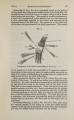
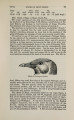
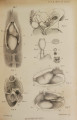
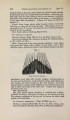
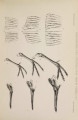
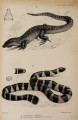
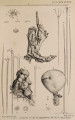
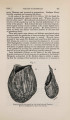
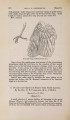
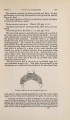
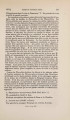
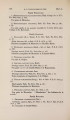
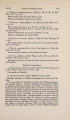
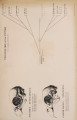
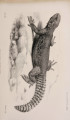
Show 1874.] DR. J. E. GRAY ON CROCODILUS JOHNSTONI. 177 4. On Crocodilus johnstoni, Krefft. By Dr. J. E. GRAY, F.R.S. &c. [Received February 17, 1874.] (Plate XXVII.) Mr. Krefft has kindly sent to the Museum a cast in plaster of Paris of the head and dorsal shield of a Crocodile discovered by Mr. Johnston, of Cardwell, Rockingham Bay, Queensland. It is, as I decided P. Z. S. 1873, p. 334, from the examination of a photograph, a Crocodile, but differing from all other Crocodiles in the form of its head and teeth. This Crocodile has had various names given to it. When Mr. Krefft sent me a photograph of the skull in 1871,1 proposed to call it Tomistoma krefftii; but that name was never published, and the examination of the skull has shown that this Crocodile is not a Tomistoma. Mr. Krefft,in the Society's 'Proceedings' for 1873,p.335,describes it under the name of Crocodilus johnsoni, and says it was discovered by Mr. Johnson; but in a letter to me of the 15th of May, 1873, he says, " I call it Crocodilus johnstoni," not "johnsoni;" and I suppose the name should be that of Mr. Johnston of Cardwell, and not Johnson, as mentioned in Mr. Krefft's paper in the • Proceedings.' This species agrees with the Crocodiles of the Old World in the possession of four nuchal shields in a cross line at the back of the head, and in having a rhombic cervical disk of six keeled shields, the lateral ones being smaller and opposite the suture between the front and hinder pair. The dorsal disk is formed of six longitudinal series of nearly equal keeled scales, with one or two more or less distinct rows of smaller shields on each side, the inner one of which does not reach the hinder thighs, and the outer one is much shorter and smaller. The keels of the two outer series of dorsal shields unite together, and form one keel just before the front of the thighs, which is extended down the side of the tail, as in the African Crocodiles. The toes are webbed, and the hinder sides of the legs and feet have a fringe of elongated triangular scales. The African and Australian Crocodiles differ from the Molinia of Central America in the head being only slightly or not enlarged in front of the lower canines. The form of the head of the Australian Crocodile is so different from the form of the head of the African and Madagascar species that I am inclined to make them into two sections or subgenera. 1. CROCODILUS. The head depressed, rather broad, tapering in front; the forehead and upper part of the face flat, shelving on the sides. 1. CROCODILUS VULGARIS, Gray, Cat. Sh. Rept. part ii. p. 15. Continental Africa, North, West, East, South. B.M. |