| OCR Text |
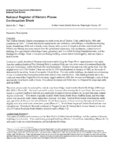
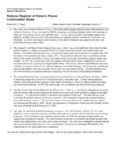
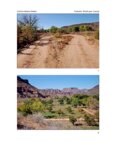
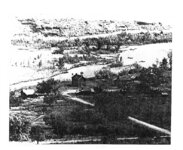
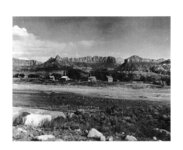
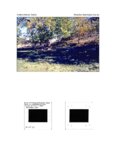
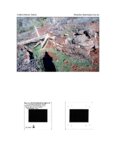
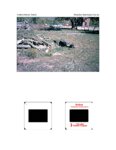
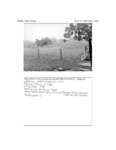
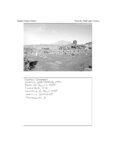
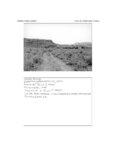
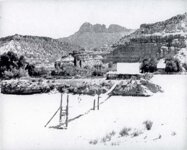
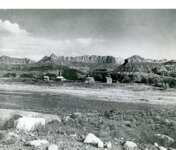
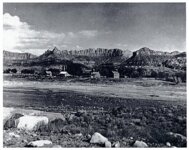
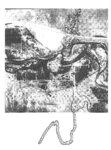
Show OM S No. 1024·001 8, NPS Form United States Department of the Interior National Park Service National Register of Historic Places Continuation Sheet Section No. § Page ~ Grafton Historic District, Rockville, Washington County, UT population of Virgin City had reached critical mass, and that fall six families led by Nathan Cram Tenney were called from Virgin City to settle Grafton, located upstream, named after a town in Massachusetts.9 Old Grafton The families of Nathan C. Tenney, Benjamin Platt, Don Carlos Shirts, William R. Davies, Hyrum Barney and James McFate were listed at the beginning of the 1860 Virgin City Census although they lived at Grafton. 10 They chose a site on the south side of the "Rio Virgen" approximately six miles upstream of Virgin City.11 They promptly began building a dam, laying out a system of ditches, and clearing the land with the intention of growing cotton. 12 In March of 1860 Grafton was organized as Precinct no. 8 of Washington County, and the following appointments were made: James McFate as justice of the peace, Darius Shirts as constable, Benjamin Platt as pound keeper, and Nathan Tenney as road supervisor. 13 The weather cooperated with the pioneers in 1860, and the crops were a success. That summer 105 acres had been planted, including twenty-five of wheat, ten of cotton, ten of sugar cane, and twenty-five of corn.14 It was clear, however, that crops alone would not sustain the settlers, and by 1861 the farmers had added cattle ranching to their operations. This industry WOUld~ O ' e increasingly important for their survival, as farming s harsh, and floods in January destroyed the dam and was difficult and unpredictable. The winter of 18 O~ carried much of the settlers' work down the river. Aft more flooding during the following fall it became clear that this location was not habitable. A new town site was chosen one mile up the river, and preparations were made to establish the new community. A meeting was held on December 13, 1861, and Chandler Holbrook as named surveyor with John Nebeker and William Branch assigned to assist him; Chapman Duncan was appointed as foreman of the new water ditch; Nathan Tenney became the chief herdsman; and Franklin W. Young as elected as both the first bishop of the newly organized Grafton Ward 15 and the first post master for a new mail route between Grafton and Cedar City. Another town named Grafton already existed in northern Utah, so this settlement was 16 officially called Wheeler for a time. The residents also petitioned and received from the Territorial Legislature $1,500 to build a wagon road from Grafton to St. George and improve and extend the road from Harmony to 17 Toquerville. The road to St. George was an extension of South Street that followed the Virgin River to the west. Traces of this abandoned road can be seen in~ National Park Service aerial P~ Graftor) . ';:> The road from Harmony to Toquerville was most likely the present-day State Route 17. \~ t6 1~cJ..M~J. . In May of 1861 Church President Brigham Young and several other presiding elders visited Dixie to assess the progress of the Cotton Mission. They were surprised to find the population very small, in spite of Young's past 9 Ronald C. Ballard. "On the Banks of the Rio Virgen [sic)," p. 6 . 10 The first U.S . Census taken at Grafton was in 1870. Families settled there in 1860 were listed at the beginning of the Virgin City census . 11 Andrew Jenson . Encyclopedic History of the Church of Jesus Christ of Latter-day Saints, pp . 293-4. 12 Deseret News, May 23, 1860, p. 93. 13 Andrew Jenson. History of the Grafton Ward. 1860. 14 Church Historian's Office. Journal History of the Church, July 22, 1860, p. 2. 15 A ward is a local congregation of the Mormon Church . 16 This town was called both Grafton and Wheeler by its reSidents , but eventually after the other "Grafton" was abandoned , this settlement was solely referred to as Grafton . 17 Andrew Jenson . History of the Grafton Ward. 1861. |