| OCR Text |
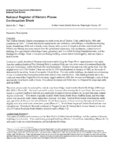
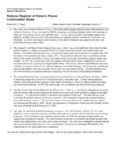
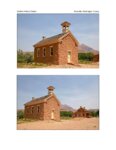
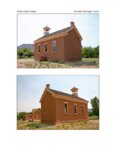
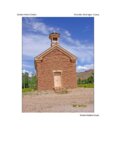
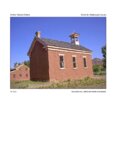
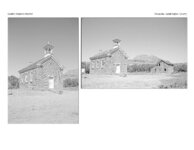
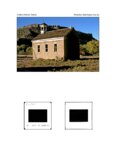
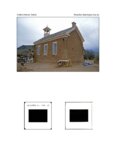
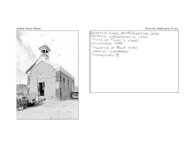
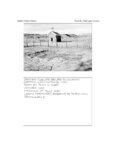
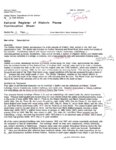
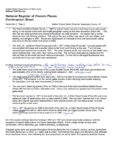
Show OMB No. 10024-0018 NPS Form 10-900-a Microsoft Word 2.0 Format United States Department of the Interior National Park Service National Register of Continuation Sheet Section No . .JL Historic Page ..ll-. ~t- af -Sl.g n If I can S 8 , Places Grafton Historic District, Grafton, Washington County, UT CO nlJ.A.t:te-ct.' .. Church leaders in Salt Lake City viewed the dwindling population with dismay, and in 1869 they sent more missionaries down to fortify Grafton and several other small towns. The numbers continued to increase slowly, and finally in 1877 Grafton had enough residents to reorganize their own ward once again. At that time the church index of the ward listed 111 members including children and infants. Beginning in 1881 a number of church organizations were formed, including a Primary Association (for the children) , with Nancy Briggs Foster Russell as president, and a women's Relief Society presided over by Charlotte Pinock Ballard. Continuing to focus on the agricultural success of the SQuthern MissiOR-, Brigham Young ~ ~~au...silkworm eggs down to Grafton and other southern settlements around 1874 in response to a nationa~silk ~. The mulberry trees in Grafton served as the food source for the silkworms! However, like the growing of cotton, this industry soon declined, as it shifted focus away from the much needed food crops.32 In 1886 the residents built a permanent adobe schoolhouse/meeting house at the intersection of East Street and North Streets. 33 An undated county school district questionnaire indicated that the one-room building was unfinished but had cost $600 to date and was funded by donations. It also showed that the structure was used for Sunday church services. The building was finally dedicated on July 7, 1888.34 It was used for school purposes until 1919, when the last eight students were transferred to the school at Rockville. Good wood for building was hard to come by in the Virgin River Valley, as the prevalent cottonwood trees were too soft and weak. The best timber could be found on the mesa above to the south and west of town and in nearby Arizona, but access was a problem. The canyon walls were ste~t-np rocky, and they were impassable in many places. The Wood Road, named for the wood that was hauled clown it, was built in the early 1890s.35 It was excavated out of the hillside and supported in many places by rock retaining walls as it switch-backed up to the mesa. "The road was so steep in places that the [descending] wagon had to be rough locked by use of log chains and~~~ee~~c~~e mo~~~~c~e the safety of negotiation of the road."36 Oil Speculation Underground oil reserves were discovered in North Creek near Virgin in 1904. Before long speculators were surveying claims throughout much of the Virgin River Basin, and an oil company came to Grafton in 1908 and drilled a well in a wash north of town. A derrick was then built south of town to the west of the cemetery; however, the amount of oil that was produced was insufficient to warrant continuing. The company left town the following year, and the boom ended about the same time when none of the claims produced as anticipated. This short-lived industry provided temporary work for some of the local residents, and Ether Wood made four dollars per day as a surveyor. 37 ---X...see continuation sheet 32Ballard, op. cit., p 18. 33County District of Schools, Questionnaire to James M. Ballard, Secretary and Trustee of Grafton School District regarding the new school house. n.d. 34 Jenson, A History of Grafton Ward, 1888 _ 35Ether Wood, Unpublished autobiography , p 8. 36Leone Russell McMullin, Grafton, Ghost Town , p 3. 37Wood, op. cit., P 9. |