| OCR Text |
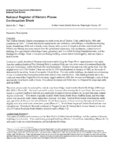
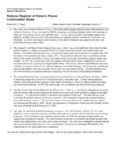
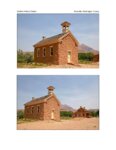
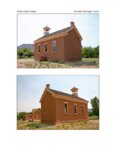
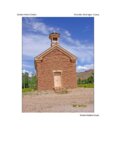
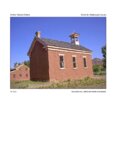
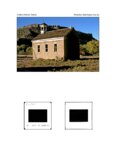
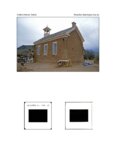
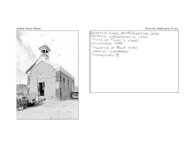
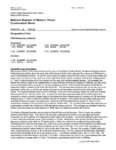
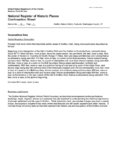
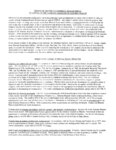
Show OMS No . 1024-00·18, NPS Form United States Department of the Interior National Park Service National Register of Historic Places Continuation Sheet Grafton Historic District, Rockville, Washington County, UT Section No. §. Page §. building was unfinished but had cost $600 to date and was funded by donations. It also showed that the structure was used for Sunday LDS church services. The building was finally dedicated on July 7, 1888. 46 It was used for school purposes until 1919 when the last eight students were transferred to the school at Rockville. Oil Speculation Underground oil reserves were discovered in North Creek near Virgin in 1904. Bef()re long speculators were surveying claims throughout much of the Virgin River Basin, and an oil company came to Grafton in 1908 and drilled a well in a wash north of town. A derrick was then built south of town to the west of the cemetery; however, the amount of oil that was produced was insufficient to warrant continuing. The company left town the following year, and the boom ended about the same time when none of the claims produced as anticipated. This short-lived industry provided temporary work for some of the local residents, and Ether Wood made four dollars per day as a surveyor. 47 Entertainment The settlers at Grafton worked very hard to eke out a meager existence, but they als() treasured recreation as a way to relieve the daily pressures oflife. Dances were often held in Alonzo H. Russell's tent before permanent structures were erected, and later the adobe schoolhouse/church was the setting for these festivities nearly every Friday night. The children were treated to sleigh rides in the winter when sufficient snow was on the ground, and summer activities included taffy pulls and swimming in the Virgin River. 48 John H. Ballard was a professional fiddler, and several of the Ballard and Russell men joined talents to create a band that played at the dances and other holiday celebrations. The Hurricane Canal and the Final Decline of Grafton as a Community The population of Grafton remained steady during the last decades of the nineteenth and the first decade of the twentieth centuries. The 1880 United States Census listed seventy-one people at this settlement. The 1890 records were destroyed in a fire, but LDS Church Historian Andrew Jenson noted after a visit to Grafton in 49 April of 1892 that there were sixteen families, totaling seventy-eight people. The 1900 U.S. Census indicated that the number had increased to ninety-eight residents, and to 107 in 1910. By 1920, however, the population of Grafton had plummeted to forty-six people. The last census taken at Grafton was in 1930, and the population had dwindled by half to twenty-three. There were several important factors that led to the ultimate demise of this small community. Irrigable land at Grafton was severely limited, and it was all claimed by the first generation of settlers. As children grew up and created families of their own, there was no available farmland, and they were forced to look elsewhere to make a living. The same problem contributed to the downfall of other neighboring settlements such as Mountain Dell, Duncan's Retreat, Northrup, and Shunesburg. Furthermore, modem utilities such as electricity and running water were never introduced to the struggling settlement of Grafton, which provided further incentive for the younger generations to move away. 46 Jenson, A History of Grafton Ward, 47 Wood, op. cit., p. 9 48 Ballard, op. cit. , p. 23 49 Jenson. 1888. History of Grafton Ward, 1892. |