| OCR Text |
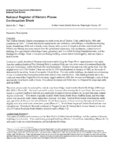
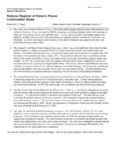
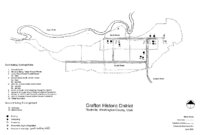
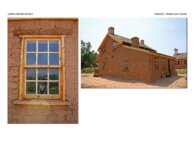
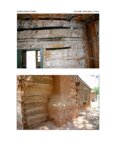
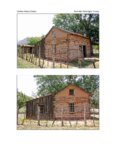
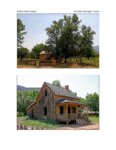
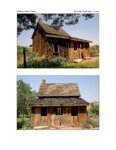
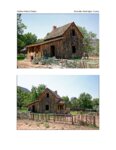
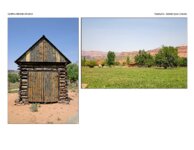
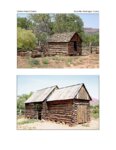
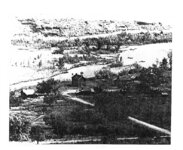
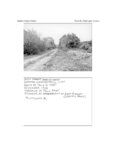
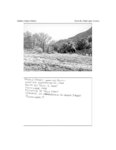
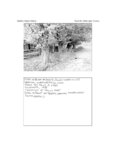
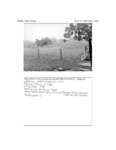
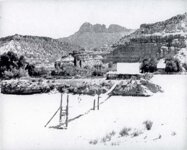
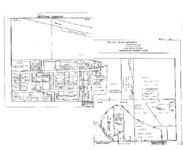
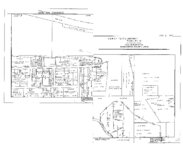
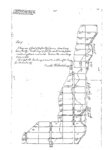
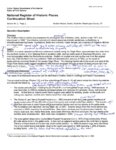
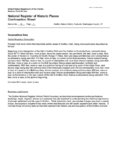
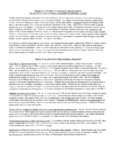
Show OMB No. 10024-0018 NPS Form 10-900-a Microsoft Word 2.0 Format United States Department of the Interior National Park Service National Register of Continuation Sheet Section No . .JL Page .JL Statement Significance of Historic Places Grafton Historic Distri~aShington County, UT Abandoned in 1945, Grafton, Utah is a unique xam Ie of a nineteenth century frontier town that, except for natural decay, remains largely unchanged since its settlement in late 1861 see map of Grafton circa 1900). The few remaining buildings have never een architectura y a tered, and many original fences mark the Q historic property lines that surround the still visible fields and irrigation ditches_ Electricity, gas, modernC). and plumbing were never introduced into Grafton,2 and the roads that remain were never paved. Survival in southern Utah was very difficult because of the harsh climate, and mid-nineteenth settlements either failed quickly or thrived. Unlike most small towns, Grafton managed to barely survive the nineteenth century, but it ultimately failed in the mid-twentieth, as technology, growth} and changing ideals rendered it obsolete. The towns that did not succeed were abandoned early, leaving few remains, and those that persisted have been greatly altered over time with additions, demolitions, new construction and modern conveniences, such as paved roads and utilities. Grafton is significant as a very rare example of a frontier settlement that has survive~_~nalt~~~ into ~~~ la~~wentie~ ntUry . ' ) Ifhree Native American sites have been identified at Grafton. The Virgin River Basin is rich with cultural resources that pre-date this period of significance, and it is possible that more sites exist within this project area. These sites may have the potential to be added to this nomination at a later date after an in-depth archeological investigation of the area has been completed. The Settlement of Utah and the Cotton Mission The Utah Te[tit9 ~~~~L~ttled by Brigham Young and his followers from the Church of Jesus Christ of Latterday Saints ( lViQr?mo~ n- -1 847. In order to escape religious persecution , the Mormon exodus began with original Church leader Joseph Smith in~., New York;.and continued across the plains into the Utah Territory after his death in Carthage, . in 1844. Numerous Mormon towns were estab,l}shed along the -way, for each time they settled down persecution would ensue, forcing them further wes~ ) ~ ct ;,-' vv..e-~5 Upon their arrival in the Salt Lake Valley, church leaders immediately called upon m~ny ~~rettmtn to leave the city and settle as much of the territory as possible in order to claim it as their own. Following the ~ LJtah War in 1858, .9ne of the ~hurch's primary goals was to create a completely self-sufficient society.3 This -rI\ was, in part, achieved by a series of economic mission~~ttle areas that had the natural advantages needed for this purpose_~These missions incl~~~ iron,~ and cotto.!JJ among others.~ <:> ~ ~ ~ ~ . '- "#,C. L;,;f01W< -1Lsee continuation sheet 2 Several personal histories state that David and Maria Ballard had a telephone in the later years , and this has been confirmed by Vilo Jones De~1jJ.le:- IrIho I') 1h I'r? {jI. 195-6. 3Leonar3< Arrington, Great Basin Kin gdom. 4Ibid. , ) 33. |