| OCR Text |
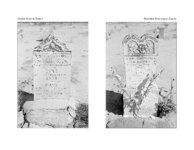
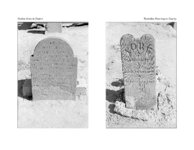
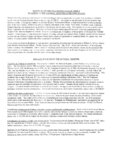
Show NPS Form 10-900-a Microsoft Word 2.0 Format OMB No. 10024'{)018 United States Department of the Interior National Park Service National Register of Historic Places Continuation Sheet Section No . .JL Page ..1L Grafton Historic District, Rockville, Washington County, UT Then beginning on January 18, 1866 all three sons of Asa Bartlett York and Mary Jane Bethers died over the course of three days from diphtheria. In February two girls, Letty Russell and Lizzie Woodbury, were killed while playing on a swing that was fashioned from the burnt cotton gin at the center of town. 30 The two girls were buried together in a single grave at the Grafton cemetery. Before the townspeople had a chance to recover from these events, tragedy struck again on April 2nd, when Joseph S. and Robert M. Berry and Robert's wife Mary Isabel Hales were ambushed and killed outside of town by Paiute Indians while returning home after a visit at Spanish Fork. Evacuation The Battalion of the Iron Military District had been organized for the continued protection of the Cotton Missionaries from Indians, and Grafton resident James Andrus led the local regiment; however, by the spring of 1866 it was clear that the towns scattered along the Virgin River could be better protected from increasing Indian attacks by consolidating. Erastus Snow, president of the Southern (Cotton) Mission, sent a letter to the each of the communities on the upper Virgin River, urging them to unify at Rockville, two miles east of Grafton. On June 10th the residents of Grafton vacated the town. Most of the log and frame homes were moved to Rockville, as this relocation was considered a temporary measure. The men commuted back home daily to tend and secure their crops, and they raised twenty acres of wheat, forty-five acres of corn, eight acres of sugar cane, and eighteen acres of cotton in 1866. The population of Rockville increased from ninety-five to approximately five hundred people as the result of this consolidation,31 and the following January it became the Kane County seat. Resettlement By the spring of 1868 troubles with the Indians had settled down enough for the missionaries to move back to their own settlements. Most of the families that resettled Grafton were former residents; however, less than half of the pre-evacuation population returned.32 As a result, the Grafton Ward of the Mormon Church was reintegrated into the Rockville Ward as a branch,33 and Alonzo Russell replaced Anson Winsor as the presiding elder. Church leaders in Salt Lake City viewed the dwindling population with dismay, and in 1869 they sent more missionaries down to fortify Grafton and several other small towns. The numbers continued to increase slowly, and finally in 1877 Grafton had enough residents to reorganize their own ward once again. At that time the church index of the ward listed 111 members including children and infants. Beginning in 1881 a number of church organizations were formed, including a Primary Association (for the children), with Nancy Briggs Foster Russell as president, and a women's Relief Society presided over by Charlotte Pinock Ballard. Continuing to focus on the agricultural success of the Southern [Cotton] Mission, Brigham Young sent Asian silkworm eggs down to Grafton and other southern settlements around 1874 in response to a national interest in silk. The mulberry trees in Grafton served as the food source for the silkworms; However, like the growing of cotton, this industry soon declined, as it shifted focus away from the much needed food cropS.34 _x_see continuation sheet Bethers, op. cit., p. 14. Stout, op. cit., p. 26. 32 Jenson. A History of the Grafton Ward, 1868. 33 This branch met separately from the Rockville Ward, although they were part of the same organization and shared the same leaders and coffers. A branch is similar to a ward, the primary difference being fewer members of the congregation. 34 Ballard, op. cit., p. 18. 30 31 |