| OCR Text |
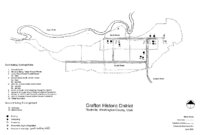
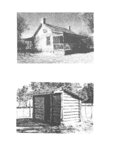
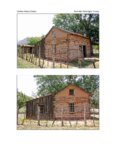
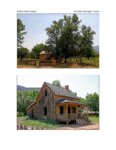
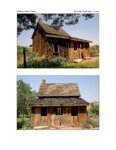
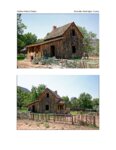
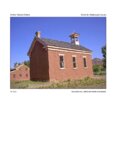
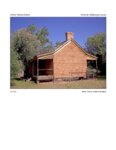
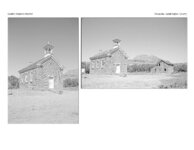
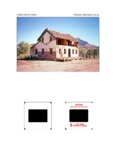
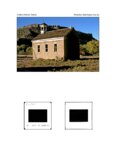
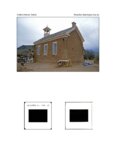
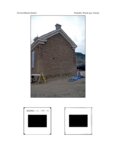
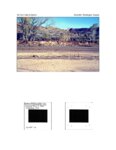
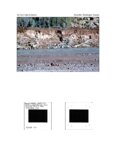
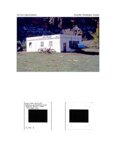
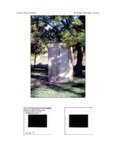
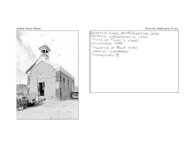
Show OMS No. 1024-0018, NPS Form United States Department of the Interior National Park Service National Register of Historic Places Continuation Sheet Section No. §. Page Z Grafton Historic District, Rockville, VVashington County, UT reintegrated into the Rockville Ward as a smaller branch,4u and Alonzo H. Russell replaced Anson Winsor as the presiding elder. Mormon Church leaders in Salt Lake City viewed the dwindling population with dismay, and in 1869 they sent more missionaries down to fortify Grafton and several other small towns. The numbers continued to increase slowly and finally in 1877 Grafton had enough residents to reorganize their own ward once again. Louisa Maria Foster (1839-1917), married Alonzo H. Russell in 1856 as a polygamous wife. She had the first loom in town, brought from New Hampshire with her as she traveled across the plains to Utah in 1852. She moved to Rockville from Grafton during the Evacuation and four of her nine children were born there. 41 In 1879 she moved back to Grafton to the small log house that Russell built for her across the street from the larger adobe house that he shared with Nancy Briggs Foster, her sister. One of Nancy Briggs Foster's sons, Alonzo Russell, Jr. (1859-1925), and his wife, Elizabeth Hardy (18581924), built their house on the west end of North Street. Although the house is now gone, the foundation remains visible. Seven of their eight children were born in Grafton, but only four outlived their parents-a testament to the difficult life in Grafton at the time. John Wood, Sr:, (1819-1911) and his wife, Ellen Smith Wood (1822-1899) were cal1ed to Grafton in 1862 and lived there briefly, before moving on to Nevada and returning to Grafton in 1877. 42 The Woods were English and joined the Mormon Church there in 1851. John worked as a coal miner in England and as a farmer, blacksmith and carpenter in Utah. The couple had ten children but lost five in infancy and only three outlived their mother. The Woods built the extant brick house with three rooms, a cellar, three porches and a granary in 1877 on the west side of Grafton Road. By the 1880 census the Woods were one of thirteen families, for a total of seventy-two inhabitants, living in Grafton. 43 At that time the church index of the ward listed 111 members including children and infants. Beginning in 1881 a number of church organizations were formed, including a Primary Association (for the children), with Nancy Briggs Foster Russell as president, and a women's Relief Society presided over by Charlotte Pincock Ballard. Continuing to focus on the agricultural success of the Southern (Cotton) Mission, Brigham Young sent Asian silkworm eggs down to Grafton and other southern settlements around 1874 in response to a national interest in silk. The mulberry trees in Grafton served as the food source for the silkworms. However, like the growing of cotton, this industry soon declined, as it shifted focus away from the much-needed f()od cropS.44 In 1886 the residents built a permanent adobe church/schoolhouse at the intersection of East Street (or Grafton 45 Road) and North Streets. An undated county school district questionnaire indicated that the one-room 40 This branch met separately from the Rockville ward, although they were part of the same organization and shared the same leaders and coffers. A branch is similar to a ward with the primary difference being fewer members of the congregation. 4 1 Platt & Platt, p. 82 . 42 Ibid ., p. 62. 43 Ibid. , p. 90. 44 Ballard , op. cit. , p. 18. 45 County District of Schools, Questionnaire to James M. Ballard , Secretary and Trustee of Grafton School District regarding the new school house. n.d . |