| OCR Text |
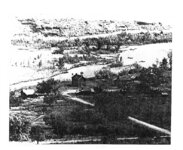
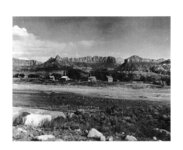
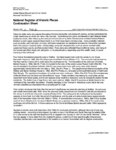
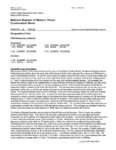
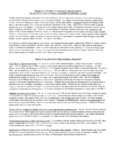
Show OMS No. 1024-0018, NPS Form United States Department of the Interior National Park Service National Register of Historic Places Continuation Sheet Section No. ~ Page ~ Grafton Historic District, Rockville, Washington County, UT Farming at Grafton had always been very difficult. The soil was sandy and alkaline, a less than ideal condition for raising crops. Furthermore, the Virgin River was very unpredictable and could rise as much as four feet in a single day, destroying dams and flooding the town: ... a great number of dams were built only to be washed away, sometimes two or three in a single year. With each flood the ditches were filled with sand, a circumstance which made an almost continuous job of cleaning, amounting in some cases, almost, to building a new ditch. Some of the settlers remarked, with a grim humor, that making ditches at Grafton was like the household washing; it was a weekly chore! 50 The river could also drop so low that it became a meandering stream. Even the well-engineered irrigation system had itslimitations, and the farmers worked extremely long and hard for their moderate harvests. For example, Thomas Woodbury, the nurseryman who initially stayed at Grafton because Franklin Wheeler Young gave him a good farming lot, left after two planting seasons because the cut worms ate all of the buds on his fruit trees every spring, and the red ants and gophers destroyed what the cut worms did not. 51 The final and perhaps largest blow that led to the abandonment of Grafton was the construction of the Hurricane Canal. With a shortage of farmland for the younger generations, the Hurricane Bench, approximately fifteen to twenty miles downstream, was ripe for cultivation, but it was too high above the river to be irrigated with a common ditch. Greater measures had to be taken, and the Hurricane Canal Company was organized on July 11 , 1893 . Each stockholder would be entitled to twenty acres of farmland up on the bench, thus providing plots for approximately one hundred young men. Wages for the construction workers were set at $2.00 per day, a significant step up from the money they could make at Grafton, although most of the workers took 25% of their payment in cash and 75% in stock (land). The canal and dam were finally finished in August of 1904. The 1910 census showed that ten families from Grafton, totaling forty-four people, had relocated to Hurricane. By 1920 those numbers had more than tripled to thirty-two families with 138 people. As families left Grafton they took their houses with them whenever possible. George Henry and Emily Hastings Wood moved their log house to Hurricane prior to 1910, having been stockholders in the canal company. Henry's nephew Andrew moved his house and bam (located east of the extant John, Sr. and Emily Wood house) along with his family to Hurricane, as well, in 1911. 52 The last people to leave Grafton were 53 Minnie and LuWayne Russell, and Edward D. and Rhoda Ballard Jones who owned the John, Sr., and Emily Wood house from 1920 until the spring of 1945. In 1944 the Joneses bought a two-room log cabin from Merrill and Agnes Russell that was located east of the Alonzo and Nancy Russell adobe home. They took the cabin 54 with them when they moved to Rockville in the spring of 1945. 50 Andrew Karl Larson . I was called to Dixie, pp. 95-6 . Letter to the Domestic Gardeners' Club , Deseret News, February 2, 1863. 51 Thomas H. Woodbury. 52 Wood, op. cit., p. 1 53 According to Vilo Jones DeMille , daughter of Edward and Rhoda Jones. 54 Platt, op. cit. , p. 111 . |