| OCR Text |
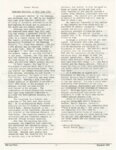
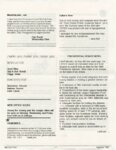
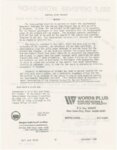
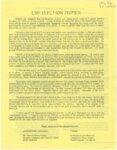
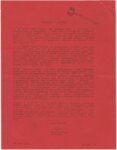
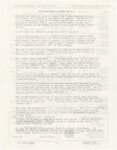
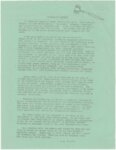
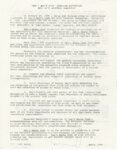
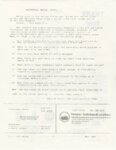
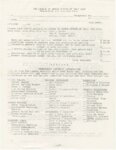
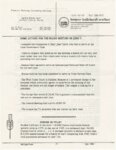
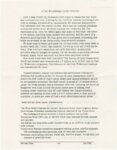
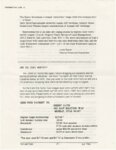
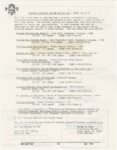
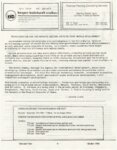
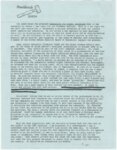
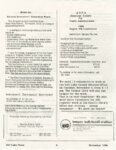
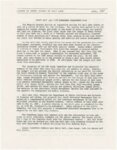
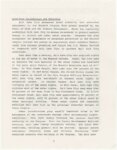
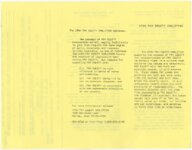
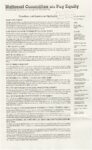
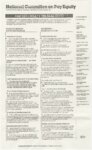
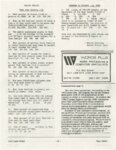
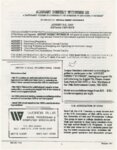
Show Natio nal Conunittee or, Pa'y Equity 1201 Sixteenth Street, Northwest•Room 422•Washington, D.C. 20036•202/822-7304 Questions and Answers on Pay Equity ., WHAT IS PAY EQUITY? The goal of pay equity is to eliminate sex and race discrimination from the wage-setting process. Pay equity addresses the fact that most women and most minorities still work in a small number of underpaid jobs such as secretary, nurse, or service worker. These jobs have historically been undervalued and underpaid because they have been held primarily by women or minorities. Pay equity means the criteria an employer uses to set wages must be sex and race-neutral. IS PAY EQUITY THE SAME AS EQUAL PAY FOR EQUAL WORK? NO. Pay equity includes equal pay for equal work, but it is broader. The Equal Pay Act of 1963 requires an employer to pay employees performing the same work the same. For example, female electricians must be paid the same as male electricians who work for the same employer. Pay equity takes equal pay for equal work one step further. Pay equity means that an employer cannot discriminate on the basis of sex or race when it sets and pays wages for different as well as similar occupations. Evidence of a discriminatory wage practice may include an employer paying jobs held predominantly by women less than comparable jobs held predominantly by men. IS PAY EQUITY THE LAW? YES. Title VII of the Civil Rights Act of 1964 prohibits wage discrimination on the basis of race, color, sex, religion or national origin. In 1981, the Supreme Court made it clear that Title VII prohibits wage discrimination even when the jobs are not identical.( 1) WHAT IS THE WAGE GAP? Women are paid only 63~ for every dollar earned by men.(2) For women of color, the wage gap is worse. Black women are paid 58~ and Hispanic women are paid 53~ for every dollar paid to men.(3) The wage gap has persisted in spite of the passage of the Equal Pay Act and Title VII of the Civil Rights Act in the mid 1960s. WHY IS THERE A WAGE GAP? The wage gap exists because most women still work in a small number of low-paid occupations. Today more than 50% of all women workers are employed in the clerical and service fields. Studies show the more an occupation is dominated by women workers, the less it pays.(4) Part of the gap between men's and women's wages can be attributed to differences in education, experience or the number of years spent working. However, most of the wage gap can be attributed to sex discrimination.(5) In other words, women's jobs pay less because they are held by women. IS IT POSSIBLE TO COMPARE ENTIRELY DIFFERENT JOBS? YES. Employers have used job evaluations to set pay and rank for different occupations within their organizations for nearly a century. Today, two-thirds of all employees work in firms where some form of job evaluation exists.(6) The Federal government, the nation's largest employer, has a 37 year-old job evaluation system that covers half a million employees. WILL PAY EQUITY REQUIRE A NATIONAL WAGE-SETTING SYSTEM? NO. Pay equity refers to how each employer pays his or her employees. Pay equity does not mandate across the board salaries for any occupation. It merely means when an employer sets pay scales, the pay should be based on the job itself. Race, sex, or ethnicity may not be factors in determining wages. WILL MEN'S WAGES BE REDUCED BECAUSE OF PAY EQUITY? NO. Federal law establishes the principle that reducing the pay for any employee is not acceptable to remedy discrimination. (7) Furthermore, male workers in female-dominated jobs benefit when sex discrimination is eliminated. In the State of New York, a pay equity study currently underway is evaluating jobs dominated by minority men as well as those dominated by women. Pay equity stands for equal treatment of all workers. , WILL PAY EQUITY ENCOURAGE WOMEN TO REMAIN IN TYPICAL "WOMEN'S JOBS"? NO. Pay equity will not prevent or discourage women from moving into male-dominate d jobs. Pay equity simply requires fair pay for the majority of women who have chosen traditional female jobs. Since pay equity was impiemenled in the Stale of Minnesota, there has been a 6% increase in the number of female employees and a 19% increase in the number of women in nontraditional jobs. Pay equity removes the barrier of pay discrimination from job choice. PAY EQUITY SOUNDS LIKE A NICE IDEA, BUT WON'T THE COST TO EMPLOYERS BE TOO HIGH? NO. First, it is illegal under Title VII to continue a discriminatory practice because some cost is involved to correct the situation. Such an objection is obviously unacceptable to justify paying blacks less than whites. Second, implementation of pay equity can be achieved with minimal disruption of an employer's budget. In Minnesota, where pay equity legislation required increases for 30,000 state employees, the total cost was only 4 % of the state payroll budget. Voluntary implementation of pay equity is cost effective. Court ordered pay equity adjustments, such as the AFSCME vs. Washington Stale case, can lead to greater costs for the employer. Over half of the estimated award in Washington Stale is 4 years back pay assessed against the state. This large judgement is the result of 10 years of intentional illegal activity. EXECUTIVE DIRECTOR Claudia E. Wayne CHAIR Nancy Reder League of Women Voters TREASURER Carole Wilson International Union of Electronic, Electrical, Technical, Salaried and Machine Wal<ers BOARD OF DIRECTORS American Civil Liberties Union American Federation of State, County and Municipal Employees American Nurses' Association Business and Professional Women's Foundation Center fa Women in Government Coolition of Labor Union Women Communication Wal<ers of America Mexican American Women's National Association National Conference of Puerto Rican Women, Inc. National Commission on Waking Women National Education Association National Organization fa Women 9to5: National Association of Working Women Organization of Pan Asian American Women Service Employees International Union United Methodist Church Women's Legal Defense Fund Women's National Democratic Club |