| OCR Text |
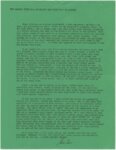
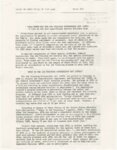
Show Senate. Key SDI floor votes on arms control amendments to the FY '88 defense authorization bill are expected in May/June. ASAT TESTING After two years of a League-supporte d U.S.-Soviet moratorium on anti-satellite weapons (ASAT) testing, the Administration is seeking to double funding for ASAT research and development in FY '88, from $189 million last year to $402 million this year. In addition, the Pentagon's request includes $22 million for production of ASAT weapons a sum that would be increased to $364 million in FY '89, according to the Pentagon's plan. This stepped-up Pentagon effort to resume ASAT testing is believed to be a part of the larger plan to deploy an SDI system. The technologies involved in shooting down satellites are very similar to the technologies involved in shooting down ballistic missiles. For SDI proponents, ASAT testing has the advantage of being less clearly subject to ABM Treaty constraints -- potentially allowing testing that, otherwisa, would be clearly prohibited by the treaty. The present ASAT testing moratorium expires at the end of this fiscal year. Representative s George Brown (D CA) and Lawrence Coughlin (R PA) are expected to offer an amendment to .the FY '88 defense authorization bill to extend the moratorium for another year. The League has supported the Brown/Coughlin amendments on ASAT testing in the past and will do so again this year. The Senate defeated an ASAT test moratorium amendment offered by Senator John Kerry (D MA) last year but support for the moratorium is growing in the Senate as well. Floor votes on the ASAT testing moratorium are expected in May/June. SALT II The congressional campaign to restore U.S. compliance with the SALT II numerical sublimits this year is likely to be hard fought, at least in the Senate. Last year, by a wide margin, the House passed the Dicks/Aspin/Fa scell Amendment to the FY '87 defense authorization bill to maintain the SALT II ucmerical limits. This year Representative Norman Dicks (D WA) has introduced E similar bill, HR 347, that enjoys the support of, virtually, the entire majority leadership as well as bi-partisan support from moderate Republicans. With continued public support, the chances for its passage in the House are excellent. The Senate picture looks very different. Traditionally, the Senate is more conservative on foreign policy issues because of its role in ratifying treaties. Last year, with a Republican majority supporting the President, the Senate offered no |