| OCR Text |
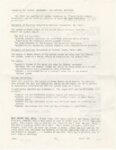
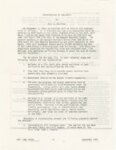
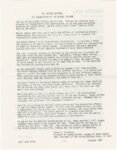
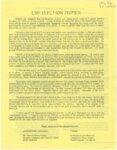
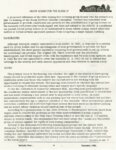
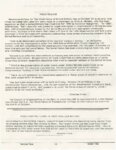
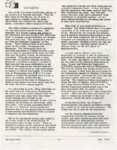
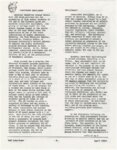
Show Ma.rt Jane Taylor SALT LAKE COUNTY'S BUDGETARY PROCESS fhe Salt Lake County budget pays for the operation of diverse departments--including t he County Health Department, Mental Hea1th, the Salt Palace,- the Hansen Planetarium, Sanitation Services and Sanitary Landfill~ These an:iother departments and agencies operate on a budget decided in the previous year by the county commissioners, with input from a variety of sources. The coming year's budget must be decided by Dec. 15, but the decision process. begins in the fan. This article will give you, an overview of the 1986 County budget, explain how the budgetary process has worked tn the past and how recent changes will affect that process. The 1986 Salt Lake County operating budget is approximately $255 million. Of that, about $107 million is part of the General Fund, which pays for a variety of services including the county jail* Approx.imately $103 million is in the Special Mill Levies budget, which pays for municipal services 1n unincorporated areas, the capital improvements fund, flood control, Hbrarfes, the Health Department and more. About $40 million is in Enterprise Funds, wh'lch is a group of services funded by bonds or fees. These services include roads, deve1opment and promotion, the Salt Palace, Mountain Oe11 golf courselt so1id waste and sanitation. The county budget also pays for the offices of. the eleven elected county officials, including the-three commissioners, sheriff, surveyor, treasurer, recorder, assessor, attorney~ auditor and clerk. County government operates on a calendar fiscal year, beginning January 1 and running through December 31. Beforethe budget is decided,by December 15, each department must .submit a budget request for the coming year to the County Auditor. before October 1. The auditor compiles these requests and projects revenues. By November 1, the auditor must submit a balanced budget to the commission. Before the final budget is adopted by the conmiission on December 15, the county holds a public hearing where concerned groups and citizens may provide input. The hearing is publicized in legal notices in the daily papers and through other notices to the media, community councils and community groups. . In June, the auditor looks at actual revenue for the year-to-date and sets actual mill levies. Tax notices go out in July for taxes which must be paid by the end of November. Once tax dollars are received, they are used to pay back the low-interest note on which the county has been operating during the year. This traditiona1 budgetary process wi 11 be impacted by two new factors--the 1egis1ative1y imposed Truth in Taxat1on and a self-imposed 5 year plan . The ~Truth in Taxation" law affects all levels of government~ It applies to any taxing entity--for example a mosquito abatement d1str1ct--that is proposing·a mill levy above the current tax rate. For a taxing e.ntity to increase its mill levy, it must take out a one-quarter page ad in the newspaperi stating that it intends to 11 0 increase the tax rate by whatever percent and the tir,,e, place and date when the issue will be discussed. Each county taxing district has a schedule for when to hold such a hearing if it intends to propose an increase~ County commissioners recently asked that each county department project a 5 year plan for program and budget. Projections for 1987 were to have been submitted by March 5. Once the 5 year budgets are in place, the county may ho1d public hearings· in ~u:gust to hear comments. A11 budget meet fogs are open to the publ 1c.. The commission expects that with adoption of 5 year plans, the budgetary process will fo11ow the usual timetable, but the process will become more one of fine-tuning from year to year in response to changes in expected revenues. SALT LAKE VOTER - 10 - MAY 1986 |