| OCR Text |
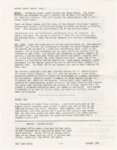
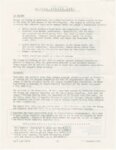
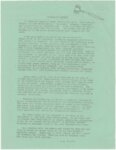
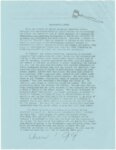
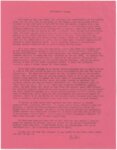
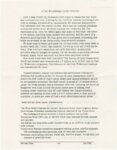
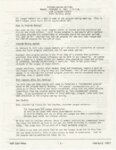
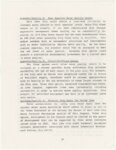
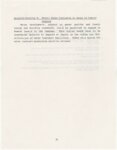
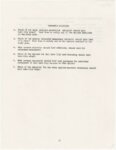
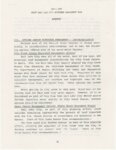
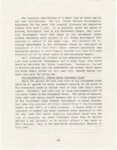
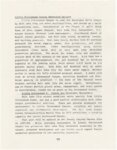
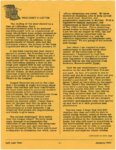
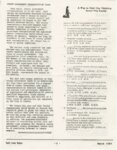
Show We Are the W:Jrld Too Hunger in Salt Lake County* I have just finished reading the above titled study prepared by Crc.,ssroads Urban Center in conjunction with the University of Utah Graduate School of Social Work, and it occurs to rre that I am hungry because I have delayed dinner in order to write this article. It also occurs to rre, however, that I can easily alleviate this unpleasant sensation in my stonach by walking into the kitchen and finding sorrething to eat. And in that resi:ect I am radically set apart fran the particip:3.nt s in the study and numerous other :people in Salt Lake County: I am tanp::>rarily hungry; they are indefinitely hungry. While it is imp:)ssible to count the number of hungry people in Salt Lake County, it is clear that hunger does indeed exist. It is easy to overlook this fact, hcwever, cecause we do not witness mass starvation among P=<JPle on our city streets. The study notes that hunger in our valley "api:ears in more subtle forms, like ski:i;ping rreals regularly, eating the sarre types of focd over and over, and eating less fcod altogether." Crossroads Urban Center, the site of the study, is the largest fcod p:3.ntry i n Utah. It is the only p:3.ntry si:ecializing in the needs of infants and children. The pantry has been in existence for over 15 years, and has seen a tripling in the use of eITErgency fcod services since 1980. Clients receive a three day su:i;ply of focd up to five ti.Ires i;er year. In 1985 Crossroads served over 18,000 P=<JPle. Qiildren are especially hard hit by hunger. While parents routinely reported skipping their own meals so their children could eat, sorretirres there was no focd for anyone in the house. One wanan at Crossroads stated, "I never ~uld have cane just for myself, but I won't let my coys go hungry." Reasons for lack of focd are numerous. Many adults in the study had recently lost jobs; sane were evicted from their hares; sane suffered from rredical problerns which consurred all available funds. Several rep:,rted problems with getting focd stamps on time, and others cited a change in family ccmp::>sition as a major cause of hunger (58% of families coming to Crossroads in 1985 were headed by single parents). Regardless of the reason, rrost particip:3.nt s in the study rep:,rted going without food for as long as t~ days on occasion. All parents in the study said they had no choice sanetirnes but to watch their children go hungry. The resultant errotional and physical changes in their children and themselves were extreITEly distressing . Each particip:3.nt was asked what he or she v.:ould like to say to saneone who thought there was no hunger in salt Lake. One answer was particularly conpelling: "I'd like them to lcok behind the fast focd joints. 'Ihey soould see the business at the dumpsters after hours. Look at the business at Crossroads, go to a soup line, lcok at my skinny kids. I'd like to see Senator Hatch after he si:ent a week diving into the durrpsters for his kids ' focd, then maybe people v.:ould understand." Hunger exists on a significant scale in our valley, and if we fail to recognize it we risk resembling a desert full of proverbial ostriches with heads in the sand. It is my hcpe that each of us will take a concrete step towards alleviating hunger in our valley. Let us oot be insulated by indifferenc e when so many are in need. -Sheryl Gillilan *Copies of the study are available fran Crossroads at •. a nomiP.al cost. Salt La.te Voter -6- July 1986 |