| OCR Text |
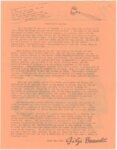
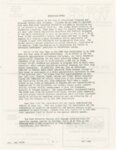
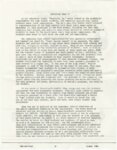
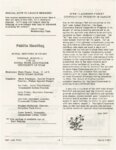
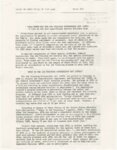
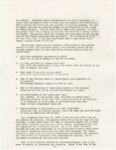
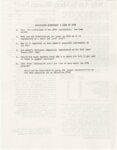
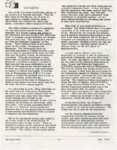
Show enrollment? CDNCURRENr ENROLI.l-1ENI' Concurrent enrollment, as it exists at Syracuse, differs fran AP in that the classes are taught by a high school teacher certified as an adjunct professor by Syracuse and are closely moniterd by the University. Classes are offered in biology, chemistry, canputer enginering, basic freshmen English, religion, calculus, psychology, and sociology. The University sends observers to each site and teachers are expected to attend a surmner workshop on adaptation of the University-desi gned course to the high school setting. Classes are taught, as they are taught on the campus, with semester exams. The cost is $36 per credit hour. Governor Bangerter signed Senate Bill 228 which provides for the graduation of high school students at the end of the eleventh grade and mandates concurrent enrollment, the giving of college credit for high school classes taught in the senior year at the high school under the supervision of one of the state institutions of higher education. Recently, the Utah F.ducation Saninar, featured Dr. Franklin Wilbur of Syracuse University's Project Advance to explain the highly successful program Syracuse operates in five northeastern states. As Dr. Wilbur remarked, concurrent enrollment has all the possibilities of a monumental failure, as well as the possibilities of t00numental success. students have been well-prepared to attend colleges, according to Dr. Wilbur. Many successful take the AP exams. One of the most important advantages to the program is the close relationships developed between the university and high school faculty. Since the classes are taught on a semester basis, the anphasis for credit is not on a single exam as AP is. The real key to their successful program is the gµalicy control that the university exercises in designing the curriculum and certifying the teachers. In addition, the University has carried out a variety of research and evaluation activities. _pr. Wilbur was not in favor of the graduation at the 11th grade and cautioned about the difficulties of working with a system of state institutions. He mentioned that the keys to success were to start small and do the program well, including providing good financial support. Utah already has a program, the Advanced Placement program operating under the auspices of the College Board of Princeton, New Jersey, which grants college credit for high school classes. Under this program, students take an exam in May of each year in selected subjects which are graded, nationally, on a scale of 1- 5. The exams cost $48 last year and most colleges and universities award credits on the basis of these exams. It is not unusual for a student who elects to take three or more of the exams during his/her high school years to receive a full year of college credit while in high school. Utah has the highest percentage of students taking AP class in the nation. The AP teacher is given a suggested syllabus and may attend a variety of workshops to aid teaching. The state legislature has awarded dollars to each school district on the basis of AP exams passed with a 3 or more. Each district has wide latitude in how the AP money has been spent. Since a successful AP program must prepare students throughout the high school programs to undertake the AP class, it can be argued that the whole school program benefits. With one successful program, why did the legislature mandate concurrent In the discussion following the presentation, Utah discussants focused primarily on quality control and the im?)rtance of good coordination at the state level. One panelist, E. B. Sorenson, Superintendent of the carbon school district, noted that he had recently read in the Harvard Business Review magazine that when manufacturers Ct,,\bl"\uLd.J,,, to Seit late Voter -9- April 1987 |