| OCR Text |
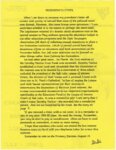
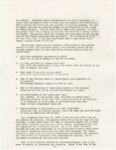
Show .Although the county feels it has a clear mandate to charge the municipalities for holding prisoners, it has been villing to discuss alternative arrangements for generating equivalent revenues. These discussions have been going on for ar least 18 months and have occupied the egendes of the County's Criminal Justice Advisory Council.. and County Council of Governments and several specia1 meetings. Since the jail finance question has state'Wide implications, funding options have also been considered by the Utah League of Cities and Tovns end The Utah .Association of Cotmties. LOCAL GOVERNMENTS PONDER JAIL FINANCE QUESTION One of the most urgent issues facing local governments within Sslt Lake County, and paten tially other urban cotmties vi thin the state, concerns paying for the County jail. As revenues available to local and state governments have nattene<l om, or actually decreased, public officials are being forced to rethink basic assumptions about program responsibility. In 1985, Utah County brought suit against a number of municipalities vi thin the County in order to establish its right to recover the costs of incarcerating prisoners arrested for violating city ordinances. In Utah County vs. Orem the State Supreme Court rendered a decision that clearly establishes that counties may charge cities for incarcerating municipal prisioners. Based on what it feels are relevant statutes, Salt Lake County government has taken the position that it must charge municipalities for jail services. This position has, not surprisingly, been challenged by municipal officials vho feel that the jail function is, and should remain, solely a county responribility. The jail finance situation in Salt Lake County is further complicated by the fact that Salt Lake City participated in the original cost of constructing the current county jail over 20 years ago and has a (Court stipulated) agreement vith Salt Lake coootyfar jail services in exchange for its equit)T interest in the faci1i ties. Rapid grovth in Salt Lake county and changes in state prison policies have placoo great pressure on current jail facilities. While the County has added considerably to the capacity of its maximum. security jail.. a nev minimum security facility is urgently needed. County officials, hovever, have state<:I that the county cannot implement plans for nev facilities until it has been determined hov they 'Will be pa.id for. Since there is a rough correlation between persons vho are arrested for violations of city and county ordinances and the profile$ of . persons who could be held in a minimum. security facility. Co1.m.ty officials have zeroed 1n on their ability to charge municipalities and the county municipal type service district (vhich provides services in the unincorporated area) for housing prisioners as a means for constructing an <l operating a nev jail. Salt Late Yoter Three major funding options have emerged from these discussions: 1. Direct Billings to municipalities and the unincorporated areas of Salt Lake County to recover the costs of booking and/or incarceration of violators of munkip81 and county ordinances. 2. Creation of a Special jail District 'With responsil>ilty for misdemeanant prisioners. J. Seeking legislative approval for a proposal by the Utah League of Cities and To,m.s that counties be grante<J additional taxing authority outside current mill levy limitations for the purpose of constructing, maintaining Mld operating jail faciti ties. In addition to the funding options noted above. . local go'Yef"runent offtcicd$ ho.ft considered at length vays and means of relieving pressure on the jail. An effort is nov underway to develop procedures for encouaging the clearance of outstanding warrants and all jurisdictions are being asked to make greater use of citations. _ From the .ASPA BUZZ Decem l>er 1986 ************* ************* ************ -9- Lyla fuller Res: 266-0075 hooper-ba ll,taedt realtor,~ 4JO [a<;I ]900 Soult,. Su1l1' N?IJO Salt Lal<.e City Utah 0'1107 (HO 1l ?Cf, :,,11r, Januaru 1 981 |