| OCR Text |
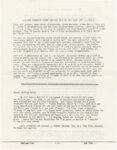
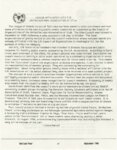
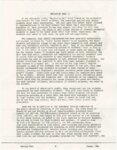
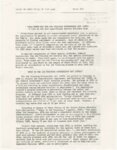
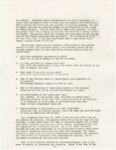
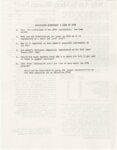
Show EDUC}_a,ION NEWS E.ducating .Able Learners was the focus of the conference funded.by the Sid w. Richardson foundation of Forth rlOrth, Texas, at Snowbird Decerrber 4-6. The foundatio n has sp:msored a four-year study of programs throughout the country and canada for what they call "able learners. " As Val Wilkie, executive vice-pres iden~ of the foundation, notes in the foreword to the study, "It has been relativel y easy for our nation to reach conciensus on the need for special programs for students with learning disabilit ies, physical handicaps, and language differences#$ There has been a tendency, however, to overlook the special needs of the able learner." The foundation was not content to only fund a study but has funded a series of conferences throuqhout the nation to disseminate thei~ study arv1 has given $3 .5 mill kn to four school districts in the Fort Worth-TJa.llas area to J.mp~e~,_nt their findings... As one Salt Lake educator sighed, H those folks talk about millions the~ way we discuss thousands.n Probably the two most important r:oints the study makes is that any progrrun for able learners must be incorporated in a K-12 continuum, even though some of the programs might not be implemented at the sallle time. The district must articulat e a written philosoph y for the education of able learners that is consisten t with the goals and values of the school district and the com:nunity. secondly, the study recommends the adoption of flexible pacing at all levels, that is allowing students to advance as they master content and skills,at a pace which allows a steady challenge to all students. The study concludes with recormnendations and a discripti on of a program for a hypotheti cal district of 60,000 students. First canes a period of assessroont, in which faculties , adrninins trations, parents and the connnunity are involved, then the development of a philosophy ar~1 the comprehensive planning for· all grades. The report suggests, that if the community values internati onal education , two or more elementary schools could become magnet schools for language education culminating in one or more high schools which offer the Internati onal ' Baccalau rete. The district will have at least one high school which concentra tes on the perfo.nning and visual arts while providing students with a rigorous liberal a.rts background .. The secondary schools will offer as options, ~..dvance Placement classes, concurrent enrollment between high school and college, as well as promotion of early entrance into college for some students. The mythical school district wi11 offer saturday enrichment classes and enrichment and study opportun ities in the smnrrier. How do Utah schools fit the model·? Some of this will be discussed in our state study on gifted and talented. Most of the particii;.e nts in the Snowbird seminar were educators --and part of the purpose of the seminar was to foster communication between these groups. Two th.oughts remained fixed in fl¥ mind. The first, is that perhaps some of these programs, could be a reality even in Utah with our dubious distincti on of having the largest class sizes and the least amount of m:>ney s:pent per pupil in the nation if districts could unite to promote some of these programs. The Salt Lake district has i.nitiated the Internati onal Baccalaurate in all four SALT LAKE VOTER - 7 - FEBRUARY 1986 |