| OCR Text |
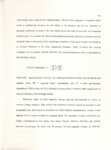
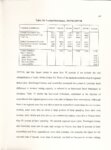
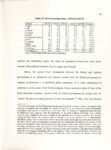
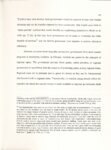
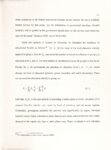
Show 146 1994).44 However, it is pursue redistributive effectively the poor to the rich primary significant. policy. For lead to 'inefficient primary health are impossible, for local governments to local distribution of income from example, migration.' However, when social services like decentralized to local governments, the Social services like financing primary and hence of these services a education and adequately. Hence, entirely to the federal government significant distributional primary health care federal government concerned with governments may be either unable that have not case for strong because the distributional implication of such services is disproportionately, leave the local can education and redistribution is poor usually difficult, though benefit the equity cannot the local governments. Left to their own, or uses implications unwilling transfers to are to provide ensure that these services public services adequately provided (Burki et al. 1999, pp. 27-28). Transfers to the regional governments began government allocated transfers approved projects transfer 44In and to largely remained addition to the to the provide regions on an in 1992/93 ad hoc assistance to the individual and basis, mainly regions. In the federal to support 1993/94, the ad hoc, where the federal government allocated grants to cover "good intergovernmental transfer programs share certain objectively as possible, ideally by some well-established formula. They are not subject to hidden political negotiation. The transfer system may be decided by the central government alone, by a quasi-independent body (such as a grants commission), or by some formal system of central-local committees; Transfers are relatively stable from year to year to permit rational sub national budgeting. At the same time they are sufficiently flexible to ensure that national stabilization objectives are not thwarted by sub-national finances. One approach that appears to achieve this dual objective is to set the total level of transfers as a fixed proportion of total central revenues, subject to renegotiation periodically (say, every three to five years); the transfer formula (or formulas) is transparent, based on credible factors, and as simple as possible. Unduly complex formulas are unlikely to prove feasible or credible in countries where, for example, there is serious dispute about regional population sizes." (Litvack et al. 1998, p. 13) objectives characteristics: Transfers are of the grant, determined as |