| OCR Text |
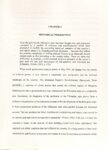
Show CHAPTER 2 HISTORICAL PERSPECTIVE Over the past decade Ethiopia's past has been fought over and constantly redefined by a number of revisions and reformulations which have attempted to modify the prevailing historical narrative of the country's and to past adopt it to changing political situations because they reflect the extreme complexity of writing national history in an ethnically-bound climate such as that prevailing in the country today. There are some real difficulties in creating a multi-centered inclusive narrative of the nation's .... past until old and disbanded. When of (Triulzi 2002, a new landscape of the (EPRDF), a country. a foundation. Its protracted diagnoses account "did not portrayal question ancient past and led oppressive regional by to power in came The of self-assertion and exclusion May 1991, the change completely a parties that ousted the civil war, restructured the of the of the problems of the account of the Ethiopian state innovative was state Ethiopian development unacceptable centralizing and building attributed to indifference at best and utter denial at worst a political Mengistu completely state derive from of the Ethiopian a state. because the historical unitary would have been and ethnic conflicts that had afflicted the country for of on a state rooted in monarchy" (Triulzi 2002, 278), for, nature of the process of state merely Democratic Front military regime Ethiopian not into the perspective new Ethiopian People's Revolutionary the Great Tradition of a an are 276) interpretation of the historical It finds mainstream an government coalition of ethnic Hailemaraim after different p. power; it also ushered political new stereotypes new if it had, the highlighted. long period of time by previous governments The were of the |