| OCR Text |
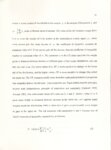
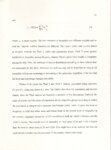
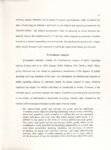
Show 9 provision of each good. Such a structure of government, in which the jurisdiction that determines the level of provision of each public good includes precisely the set of individuals who consume the good, I shall call a case of perfect correspondence in the provision of public goods. In the ideal model, each level of government, possessing complete knowledge of the tastes of its constituents and seeking to maximize their welfare, would provide the Pareto-efficient level of output and would finance this through benefit pricing. That the allocation of resources resulting from our ideal case of a perfect correspondence is Pareto-efficient is, I think, clear [assuming no private sector inefficiencies] (quoted in Tresch 2002, pp. 836-37) . In this rather "ideal" description of federalism, citizens for the type and level of heterogeneity public goods are of tastes and perfectly matched preferences by of the relevant government. Under "perfect correspondence," decentralization entails the assignment of those public goods constituency. to a level of government closer, and Oates further elaborated the potential thereby responsive, to a local of decentralization to enhance social welfare in what he calls the "decentralization theorem": For public good-the consumption of which is defined over geographic population, and for which the costs of providing each of level output of the good in each jurisdiction are the same for the central or respective local government-it will always be more efficient (or at least as efficient) for local governments to provide the Pareto-efficient levels of output for their respective jurisdictions than for the central government to provide any specified and uniform level of output across all jurisdictions. (quoted in Tresch 2002, pp. 838-39)4 a subsets of the total However, the providing reason most local governments public goods are more efficient than the central government in is attributed to the information advantage of the former 4rn a recent paper, Oates expands this theorem when he writes: "Decentralized levels of government have their raison d'etre in the provision of goods and services whose consumption is limited to their own jurisdiction. By tailoring outputs of such goods and services to the particular preferences and circumstances increases economic welfare above that which results from uniform levels of such services that are likely under national provision. The basic point here is simply that the efficient level of output of a 'local' public good (i.e., that for which the sum of residents' marginal benefits equals marginal costs) is likely to vary across jurisdictions as a result of both of their the constituencies, decentralized provision more differentials. To maximize overall social welfare thus 1999, pp. 1121-22). requires that local outputs vary accordingly" (Oates |