| OCR Text |
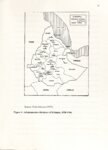
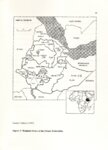
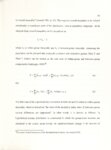
Show 27 life -of people that has as given rise to the debate on the historical nature of ethnicity, as well the historical nature of the state. The mainstream "university history" state building to account distinguish of Ethiopian history, it from within the framework of "popular which Triulzi history,,,13 centralizing focuses on monarchs. This is (2002) calls the process of no exception to Ethiopia. Indeed, As the modem writing of the country's history was conducted at a time of intense state-building and nationalist convictions throughout the African continent, the Ethiopian history which surfaced then was on the whole institutional in character. It tended to extol the centralizing and unitary role of Ethiopian monarchs, and concentrate on their innovative and modernizing role within Ethiopian society. state-centered and (Triulzi 2002, p. 277) In this historical account, the had its B.C. origin in the ancient The Aksumite Ethiopian city-state kingdom state is traced of Aksum, which as far back emerged thrived between the first and From this and the Red Sea, to beginning, emergence of modem nineteenth 13"In century." the Ethiopia Over this as far away Ethiopian state centuries A.D. This core, Tigre highlands, to the Gulf of Aden. expanded southward, culminating with its current long period as 2000 years ago. It around the sixth century eighth period witnessed the expansion of the empire, stretching from its present-day Eritrea as geographic of state size by in the the end of the expansion (and sometimes state case stands out as a turning point between 'university history' with its exacting archival and field research, and 'public history' with its forceful ethos aimed at giving a sense of identity to communities born and raised in the ethnically-uprooted Diaspora world. From a historiographical point of view, this meant that, right from the beginning, the rewriting of ones groups' past was embedded in a strenuously defended 'moral ethnicity' which tended to isolate each community within its own cultures and linguistic bounds, while at the same time leading ideological and political overtones to the general revision of Ethiopia's past." (Triulzi 2002, p. 280) a way, Mohammed Hassen's stated standards of objectivity and 14"The Ethiopian state has endured considerable vicissitudes since its genesis some two millennia back. At times, it has expanded; at other times, it has contracted. It has changed its loci on a number of occasions. Its component units have also altered with time. But three epochs stand out as formative periods for the |