| OCR Text |
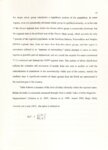
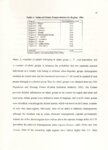
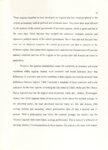
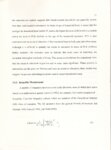
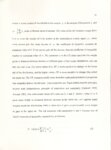
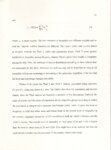
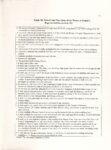
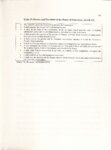
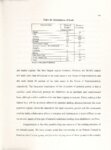
Show 145 "[L]eft to their decisions only on 27-28). pp. benefits of the benefits captured by their constituents. services that confer benefits "under-provide" 1999, devices, local governments would be expected own on This would cause budget them to neighboring jurisdictions (Burki In this way, local governments services.l" to base their can and the federal government et al. be made to internalize the wider uses transfers to achieve allocative efficiency. However, programs in concerns developing regional equity. about inequality countries. In The government among local governments drive most transfer Ethiopia, provides transfers are guided by block grants, called the subsidies, principle to regional governments in accordance with the obj ective of promoting equity among regional Regional states are in distribution is left to objective principle regional free to states. spend the money Theoretically, as they the transfer for which the transfer money is made available to see design fit. of states. Interpersonal should reflect the regional governments (Bahl matching grants may be constructed so as to internalize relevant externalities. On the other hand, where the underlying purpose of the grant is redistributive in nature, grants should be lump-sum general grants, so as to interfere as little as possible with state-level decision making." (Brennan and Hamlin 1998, p. 148) 43"The characteristics that make for good local tax also make for high costs of administration. To function local tax, the incidence of a tax must be borne locally. To be cheaply administered, a tax must be imposed on a large volume of taxable activity flowing through a small number of collection points. Few as a taxes meet both criteria simultaneously. Taxes that meet the test of localized incidence (such property taxes) large numbers of small-scale taxpayers. Taxes that meet the ease of administration test (such as taxes on manufacturing and imports and origin-based value-added-taxes [VATs] tend to involve large-scale inter-jurisdictional incidence shifting. Local taxes also tend to be subject to arbitrarily assessment and incidence patterns. Property taxes are based on the gross (rather than net) value of assets held in the particular form of real property. They are thus a poor reflection of benefits received or ability to pay. Local business taxes also tend to be arbitrarily assessed (in the absence of good record keeping among small businesses). For all these reasons transfers can be justified a substitute for local taxes." (Burki et al. 1999, pp. 27-28) or can business tend to involve |