| OCR Text |
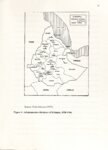
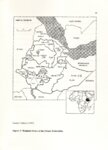
Show 44 the perhaps was major constraint. the failure of the Indeed, government of the main one land tenure system that evolved during 1970s early was: the system rist areas system in the AmharaiTirgre highland can system. The "Land to the Tiller." The the creation of modem complex (Gilkes 1975). Generally speaking, Ethiopia highly was be divided into two parts: the of the north and center, and the system in the non-Amhara provinces in the south and refers to for the 1974 Revolution to deal with the issue of the land tenure cry of student demonstrators in the rallying reasons west. The rist gult system basically a kinship land, land belonging to a lineage, not to individuals, by virtue of it having been claimed by a founding ancestor by right of first cultivation. Individuals could claim use rights over land wherever they could prove their birthright to be common with others on the land. Such were rights based on the principle of ambilineal descent. That is, rist could be claimed through one's mother or father. (Keller 1988, p. 51) ... The land tenure system that evolved in the southern and western part of the country result of the was a expansion of the core Ethiopian the latter part of the nineteenth century. The fact that the conform to the land as a custom of the rigid political leverage. Large confiscated and distributed land involved on Abyssinian the land as as they paid tribute to to the new owners. pronounced. After the introduction of commercial land was landlords converted into began to did not newly conquered use areas were settlers, who let the indigenous people work as At areas Core enabled successive emperors to to be known gult. during areas settlers from the north. The method of distributing dispensing ownership right long newly conquered tracts of land in the to the new state into these This land first, this process simply made the feudal private property. evict their tenants in agriculture holding system nature of in the late society numbers. For instance, some more 60s, however, As mechanization made its way into the large came 2,000 to South, 5,000 |